6 Best 10 Sky-watcher Dobsonian Telescopes with Synscan (2026): Our Picks
Compare 6 Sky-Watcher Dobsonian telescopes with SynScan and similar GoTo options. See which aperture, setup and tracking features suit young stargazers.
 By Owen Palmer
Updated November 26, 2026
 By Owen Palmer
Updated November 2026
If you want a 10 sky-watcher dobsonian telescope with synscan style setup, the goal is usually simple: a big-enough mirror to show planets and star clusters, a computerized pointing system that helps a beginner find objects, and a base that a family can carry outside without a struggle. This list focuses on those needs. Selection criteria were aperture, the presence of GoTo or computerized tracking, portability, ease of setup for first-time users, and the general reputation of each brand and model among owners. This is a research-based comparison built from manufacturer specifications and common owner feedback patterns, not from hands-on testing.
Our top picks at a glance
- 1TOP CHOICEBest overallSky-Watcher S11800 GoTo Collapsible Dobsonian 8-InchView on Amazon
- 2
 TOP CHOICEBest for large-aperture viewingSky Watcher Classic 250 Dobsonian 10-inch TelescopeView on Amazon
- 3
 TOP CHOICEBest for tabletop useSky-Watcher Heritage 150 Tabletop Dobsonian TelescopeView on Amazon
- 4
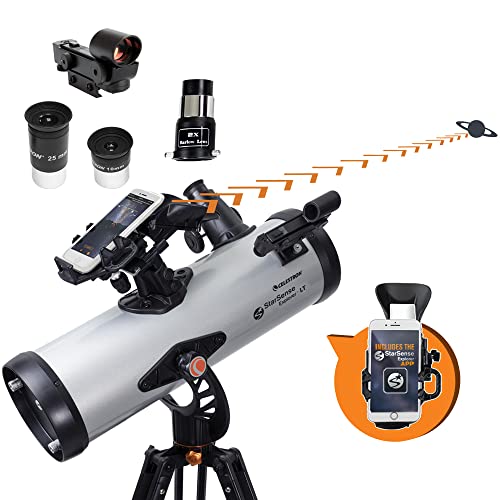 Best for phone-guided beginnersCelestron StarSense Explorer LT 114AZ Newtonian Smartphone Guided TelescopeView on Amazon
- 5
 Best for planetary detailSky-Watcher Skymax 102mm Maksutov-Cassegrain Reflector TelescopeView on Amazon
- 6
 Best budget pick for Moon viewingCelestron FirstScope Signature Series Moon Tabletop Dobsonian TelescopeView on Amazon
Our Top Picks
Quick Comparison
| Product | Best for | Key feature |
|---|---|---|
| Sky-Watcher S11800 GoTo Collapsible Dobsonian 8-Inch | Overall GoTo use | 8-inch collapsible GoTo Dobsonian |
| Sky-Watcher Classic 250 Dobsonian 10-inch | Large-aperture viewing | 10-inch solid-tube Dobsonian |
| Sky-Watcher Heritage 150 Tabletop Dobsonian | Tabletop use | Compact tabletop base |
| Celestron StarSense Explorer LT 114AZ | Phone-guided beginners | Smartphone app sky navigation |
| Sky-Watcher Skymax 102mm Maksutov-Cassegrain | Planetary detail | Compound-style 102mm optics |
| Celestron FirstScope Signature Series Moon Tabletop Dobsonian | Budget Moon viewing | Moon map wrap and lunar eBook |
Sky-Watcher S11800 GoTo Collapsible Dobsonian 8-Inch
Sky-Watcher S11800 GoTo Collapsible Dobsonian 8-Inch (White)
Best for: Overall GoTo use
This is a good fit for families who want computerized object finding without giving up the classic Dobsonian feel. The collapsible design appeals to people who need to store the telescope in a closet or car trunk.
Key specs
- 8-inch (200mm) aperture
- Collapsible Dobsonian tube and base
- GoTo computerized object tracking
Pros
- Large light-gathering aperture for its class
- Collapsible design eases transport and storage
- GoTo system helps beginners locate objects
Cons
- Heavier to carry than tabletop models
- Setup takes longer than a simple manual Dobsonian
Bottom line: A strong pick for a family that wants one telescope to grow with them, with GoTo help on nights when the sky is hard to navigate.
View on AmazonSky Watcher Classic 250 Dobsonian 10-inch Telescope
Sky Watcher Sky-Watcher Classic 250 Dobsonian 10-inch Telescope – Solid-Tube – Simple, Traditional Design – Easy to Use, Perfect for Beginners (S11620)
Best for: Large-aperture viewing
Suited to older teens and adults who want the most light possible from a traditional Dobsonian. It rewards patience and a dark site.
Key specs
- 10-inch (250mm) aperture
- Solid-tube Dobsonian design
- Simple, traditional mount
Pros
- Large aperture shows fainter deep-sky objects
- Solid tube is simple to understand and maintain
- Few electronics to troubleshoot
Cons
- Bulky and heavy for younger children to move
- No computerized pointing, so star-hopping skills help
Bottom line: Best for a motivated teen or adult who wants maximum aperture and is willing to learn the sky by hand.
View on AmazonSky-Watcher Heritage 150 Tabletop Dobsonian Telescope
Sky-Watcher Heritage 150 Tabletop Dobsonian Telescope – Perfect for Beginners, Easy Setup, Portable, and Fun (S11710)
Best for: Tabletop use
A good match for families with limited floor space or a balcony setup. It sets up quickly and can sit on a sturdy table.
Key specs
- 150mm aperture Newtonian reflector
- Tabletop Dobsonian base
- Designed for quick setup
Pros
- Light enough for one adult to carry outside
- Quick setup suits short observing sessions
- Good light grasp for the size
Cons
- Needs a stable table to avoid vibration
- Smaller aperture than the 8-inch and 10-inch models
Bottom line: The right choice for a beginner family that wants a compact, easy-to-store telescope for the Moon, planets and bright clusters.
View on AmazonCelestron StarSense Explorer LT 114AZ Newtonian Smartphone Guided Telescope
Celestron StarSense Explorer LT 114AZ Newtonian Smartphone Guided Telescope | Smartphone App Sky Navigation, Manual Reflector Telescope, Beginner Deep-Sky Telescope, Bright Celestial Views, Portable
Best for: Phone-guided beginners
Ideal for kids and first-time observers who find star charts confusing. A smartphone app guides the aim, which takes much of the frustration out of early nights.
Key specs
- 114mm Newtonian reflector
- Smartphone app sky navigation
- Altitude-azimuth mount
Pros
- App-based alignment reduces guesswork
- Good for children with limited patience for charts
- Portable for backyard or patio use
Cons
- Relies on a phone and a charged battery
- Smaller aperture limits faint-object viewing
Bottom line: A friendly entry point for younger observers who want quick wins and a clear path to learning the constellations.
View on AmazonSky-Watcher Skymax 102mm Maksutov-Cassegrain Reflector Telescope
Sky-Watcher Skymax 102mm Maksutov-Cassegrain – Large Aperture Compound-Style Reflector Telescope
Best for: Planetary detail
Best for observers who care most about sharp views of the Moon, double stars and planets rather than wide sweeps of the Milky Way.
Key specs
- 102mm aperture
- Maksutov-Cassegrain compound optical design
- Compact tube for its focal length
Pros
- Compact tube is easy to carry
- Strong contrast on bright, close targets
- Sealed optics tend to need less cleaning
Cons
- Narrower field of view than Dobsonians
- Less light for faint deep-sky objects
Bottom line: A focused choice for Moon and planet watchers who value detail over size.
View on AmazonCelestron FirstScope Signature Series Moon Tabletop Dobsonian Telescope
Celestron FirstScope Signature Series Moon Tabletop Dobsonian Telescope | Manual Tabletop Dobsonian Telescope with Moon Map Wrap, Great for Beginners, Compact & Portable, Includes Lunar eBook
Best for: Budget Moon viewing
A practical first telescope for a child who mainly wants to see craters and the phases of the Moon. The included Moon map and lunar eBook add learning value.
Key specs
- Manual tabletop Dobsonian design
- Includes Moon map wrap
- Includes lunar eBook
Pros
- Simple manual operation a child can learn quickly
- Included Moon map supports learning
- Compact and portable
Cons
- Limited for deep-sky objects
- Manual aiming takes practice
Bottom line: A sensible starter for a young child who is curious about the Moon and wants to learn the basics first.
View on AmazonBuying Guide
Aperture and light-gathering
Aperture, the diameter of the main mirror or lens, decides how much light the telescope collects. Larger apertures show fainter galaxies and more detail on planets. A 150mm mirror gathers far more light than a 102mm one, and a 250mm mirror collects roughly three times the light of a 150mm, because light grasp scales with the area of the aperture.
Good picks for this: Sky-Watcher Classic 250 Dobsonian 10-inch, Sky-Watcher Heritage 150 Tabletop Dobsonian
GoTo and computerized pointing
A GoTo system uses motors and a hand controller to point the telescope at a chosen object. For a beginner, this can save hours of star-hopping. Check whether the system needs alignment steps and how long they take.
Good picks for this: Sky-Watcher S11800 GoTo Collapsible Dobsonian 8-Inch, Celestron StarSense Explorer LT 114AZ
Size, weight and portability
Larger Dobsonians are heavier and need more room to store. Ask who will carry the telescope. If a child is the main user, a tabletop or compact model is often easier.
Good picks for this: Sky-Watcher Heritage 150 Tabletop Dobsonian, Sky-Watcher Skymax 102mm Maksutov-Cassegrain Reflector Telescope
Ease of setup
Setup time matters most on school nights. Manual Dobsonians are straightforward, while GoTo models add battery and alignment steps. Practice a few times in daylight so the first real night goes smoothly.
Good picks for this: Celestron FirstScope Signature Series Moon Tabletop Dobsonian, Celestron StarSense Explorer LT 114AZ
Intended targets
Think about what you most want to see. The Moon and planets reward compact, sharp optics. Galaxies and nebulae reward larger apertures and darker skies.
Good picks for this: Sky-Watcher Skymax 102mm Maksutov-Cassegrain Reflector Telescope, Sky-Watcher Classic 250 Dobsonian 10-inch
Durability and build
Solid tubes and sturdy bases handle years of use better than flimsy mounts. Check that the focuser turns smoothly and that the base locks firmly. Storing the telescope indoors between sessions protects the optics from dew and dust.
Good picks for this: Sky-Watcher Classic 250 Dobsonian 10-inch, Sky-Watcher S11800 GoTo Collapsible Dobsonian 8-Inch
Care and maintenance
Let the telescope cool to outdoor temperature before observing to reduce tube currents. Keep eyepiece caps on when transporting. Clean the optics only when needed, using manufacturer-recommended methods, because over-cleaning can damage coatings.
Good picks for this: Sky-Watcher Skymax 102mm Maksutov-Cassegrain Reflector Telescope, Sky-Watcher Heritage 150 Tabletop Dobsonian
FAQ
Is a Sky-Watcher Dobsonian with SynScan good for beginners?
Yes, many beginners find a GoTo-equipped Dobsonian easier to start with because the computer helps locate objects. Expect a short learning curve for alignment and the hand controller.
What aperture should a first telescope have?
For a first telescope, 102mm to 200mm is a common range. Larger apertures show more faint objects, while smaller ones are lighter and easier to store.
Can children use these telescopes without adult help?
Simple manual or app-guided models are often manageable for older kids with supervision. Heavier 8-inch and 10-inch models usually need an adult to lift and set up.
Do I need a dark sky to enjoy these telescopes?
Dark skies help most with faint galaxies and nebulae. The Moon, planets and bright star clusters are still rewarding from a suburban backyard.
How long does setup usually take?
Manual Dobsonians can be set up in a few minutes once you are familiar with them. GoTo models take longer because of alignment, so practice in daylight first.
Should I buy a telescope or binoculars first?
Binoculars are a good first step for wide star fields and easy handling. A telescope suits children who want more detail on the Moon and planets.
Conclusion
For most families, the Sky-Watcher S11800 GoTo Collapsible Dobsonian 8-Inch offers a balance of aperture and computerized help. Choose the Sky-Watcher Classic 250 Dobsonian 10-inch for maximum light and the Sky-Watcher Heritage 150 Tabletop Dobsonian for a compact, easy-to-store setup. The Celestron StarSense Explorer LT 114AZ suits phone-savvy beginners, the Sky-Watcher Skymax 102mm favors planetary detail, and the Celestron FirstScope Signature Series Moon Tabletop Dobsonian makes a gentle first step for young children.
Sources
- Background on the Moon, planets and sky observing for students and families (nasa.gov)
- Beginner resources on telescope types, aperture and observing techniques
- Guidance from a professional astronomy society on amateur telescope use
Before you buy: helpful guides
Related reading
- Sky-watcher Heritage 150 Tabletop Dobsonian Telescope: 5 Best Picks Compared
- Sky-watcher Classic 200 Dobsonian 8-inch Aperture Telescope: A Practical Guide (2026)
About Owen Palmer
Owen Palmer is part of our editorial team and reviews and edits our astronomy for kids, teens & families guides, checking product details against manufacturer specifications and owner feedback.
About the author
Owen Palmer writes reviews and buying guides for Youth in Astronomy.