Binocular Mount for Astronomy: 3 Best Picks Compared (2026)
Comparing three binocular mounts for astronomy, with specs, pros and cons, and a buying guide to help you steady your views for stargazing.
 By Owen Palmer
Updated November 21, 2026
 By Owen Palmer
Updated November 2026
A binocular mount for astronomy takes the shake out of your stargazing. Holding 20x or higher binoculars steady by hand is tiring, and even small tremors make faint galaxies and star clusters hard to pick out. A good mount or tripod adapter lets you lean back, relax and study the sky for longer. This guide looks at three options, explains how they were selected, and helps you match the right mount to your binoculars and your observing style.
Our selection method was research-based. We compared manufacturer specifications, the reputation of each brand within amateur astronomy, and patterns that appear in owner feedback, such as how stable a mount feels at high magnification, how easily it attaches to a standard tripod, and how well the binoculars stay in place. We did not test these products ourselves, so treat the points below as a guide to what each design is built for.
Our Top Picks
Quick Comparison
| Product | Best for | Key feature |
|---|---|---|
| Celestron SkyMaster 20×80 Binoculars for Deep-Sky Astronomy | Families and beginners who want a complete binocular and mount setup for deep-sky viewing | 80mm objectives with a tripod-adaptable, ultra-stable mounting design |
| Snapzoom Universal Binocular Tripod Mount | Observers who already own binoculars and want a simple tripod adapter | Universal fit for standard binoculars on a tripod |
| Universal Binocular Mount (UBM) with Far-Sight | Users with heavier binoculars who need a stable parallelogram mount | Standard parallelogram design with a 12-pound capacity |
Celestron SkyMaster 20×80 Binoculars for Deep-Sky Astronomy – 80mm Aperture
Celestron SkyMaster 20×80 Binoculars for Deep-Sky Astronomy – 80mm Aperture | Large 80mm Objectives, Bright Deep-Sky Views, Multi-Coated BaK-4 Optics,Tripod Adaptable, Ultra-Stable Mounting
This is the most complete option in the group. It is aimed at people who want a binocular and a stable mounting approach in one package, especially for viewing star clusters, nebulae and the brighter galaxies. Families who are starting out in backyard observing will find it easier than piecing together separate parts.
Key specs
- 80mm objective lenses
- 20x magnification
- Multi-coated BaK-4 prism optics
- Tripod adaptable
Pros
- The 80mm objectives gather a lot of light, which helps deep-sky targets look brighter.
- Tripod adaptability means you can move from handheld to a steady setup as your needs change.
- Multi-coated BaK-4 optics are designed to improve light transmission and reduce glare.
Cons
- At 20x and 80mm, the binoculars are heavy, so a sturdy tripod is still important.
- The high magnification makes the view more sensitive to vibration, which means careful focusing and a steady base matter.
Snapzoom Universal Binocular Tripod Mount
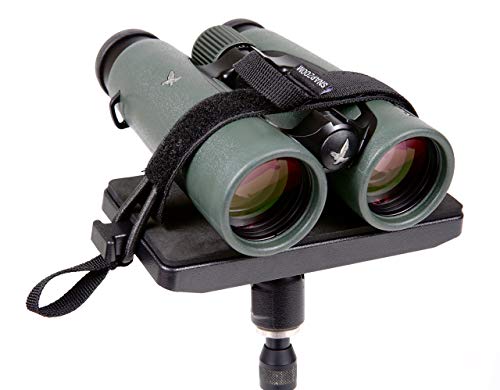
Snapzoom Universal Binocular Tripod Mount
This is a straightforward tripod adapter for observers who already own binoculars. It suits people who want a low-cost way to stop hand shake without buying a new pair of optics. It is also a practical choice for daytime birdwatching or terrestrial viewing when you need a steady platform.
Key specs
- Universal design intended to fit standard binoculars
- Mounts to a standard tripod
Pros
- Simple setup that does not require tools or complicated assembly.
- Works with many binocular sizes, so it can grow with your existing gear.
- A budget-friendly way to add stability to handheld astronomy binoculars.
Cons
- Adapter-style mounts generally offer less stability than parallelogram designs when using high-power binoculars.
- Fit can vary by binocular body, so check compatibility before you buy.
Universal Binocular Mount (UBM) with Far-Sight

Universal Binocular Mount (UBM) with Far-Sight. Standard Parallelogram with 12 Pound Capacity.
This parallelogram-style mount is designed for heavier binoculars and for observers who want smooth, controlled pointing across the sky. It fits people who regularly observe with larger astronomy binoculars and want a mount that handles their weight without sagging.
Key specs
- Standard parallelogram design
- 12-pound capacity
Pros
- The parallelogram design allows smooth up-and-down movement while keeping the binoculars level.
- The 12-pound capacity gives room for heavier high-power binoculars.
- Its structure generally supports steadier views than a basic adapter at high magnification.
Cons
- Parallelogram mounts take longer to set up and balance than simple adapters.
- Heavier mounts are harder to transport, so they suit fixed backyard setups better than travel observing.
Buying Guide
Choosing a mount starts with your binoculars. The weight, magnification and objective size all affect how much support you need. A mount that works well with a 7×50 pair may be the wrong choice for a 20×80 pair, so match the mount to the instrument rather than the other way around.
Selection Criteria
- Load capacity: Check the rated weight limit and compare it to your binoculars’ weight, including any accessories.
- Stability: Parallelogram designs generally hold high-power binoculars more steadily than simple clamp adapters.
- Compatibility: Confirm the mount fits your binocular body and your tripod’s head or thread size.
- Range of motion: Smooth tilt and pan make it easier to follow objects across the sky.
- Portability: Heavier mounts give more stability but are harder to carry to dark-sky sites.
Important Features
Look for a tripod-compatible base, secure attachment points and smooth tension controls. Some owners report that lockable joints help keep the view steady when wind picks up. A sturdy tripod with a locking center column also makes a noticeable difference, since a mount is only as stable as the platform it sits on.
Specs to Check
- Rated weight capacity
- Binocular size and weight
- Tripod thread size and mounting method
- Type of mount (adapter or parallelogram)
- Range of tilt and rotation
Choosing by Need
If you own heavier, high-power binoculars and plan to observe from a fixed backyard spot, a parallelogram mount gives you the most stability. If you already have lighter binoculars and want a quick, low-complexity upgrade, a universal tripod adapter can be enough. For families who are just starting out, a complete binocular-and-mount package keeps the setup simple.
Things to Watch Out For
- Do not assume a mount rated for a certain weight will suit high magnification. Stability depends on the whole system.
- Check whether the tripod is sturdy enough. A wobbly tripod undermines even the best mount.
- Adapters may not fit every binocular body, so confirm compatibility before ordering.
For practical setup ideas, you may also find Binocular Tripod Mount for Astronomy: Steps to Steady Views (2026) helpful, along with Binocular Mount for Astronomical Observations: A Practical Guide (2026), which covers balancing and alignment in more detail.
FAQ
Do I need a binocular mount for astronomy if I already have a tripod?
Not always. A tripod alone can hold binoculars, but a dedicated mount or adapter gives you finer control over pointing and reduces the effort of aiming. Many observers find a mount makes high-magnification viewing noticeably more comfortable.
What magnification is too high for handheld binoculars?
Many observers find that handheld viewing becomes difficult above about 10x, because hand tremor magnifies along with the image. Binoculars in the 15x to 25x range generally benefit from a mount or tripod.
Can any binoculars be used with a universal mount?
Universal mounts are designed to fit many binocular sizes, but fit varies. Check the mount’s specifications for compatible body diameters and confirm the weight limit before purchase.
Should I choose an adapter or a parallelogram mount?
Adapters are simpler and easier to carry, while parallelogram mounts usually provide more stability and smoother movement, especially with heavier binoculars. Your choice depends on binocular weight and how you plan to observe.
Does a mount help with image stability for photography?
A mount reduces movement, which can help when using binoculars with a camera adapter. For long-exposure astrophotography, a dedicated camera mount or tracking system is usually more appropriate, so consult a photography professional or an experienced astrophotographer for advanced setups.
How do I keep binoculars steady in windy conditions?
Keep the tripod low, extend only the legs you need, and use a sturdy base. Some owners report that lowering the center column and placing weight in the tripod’s hanging hook helps reduce sway. Observing behind a wall or hedge can also help.
Is a binocular mount difficult to set up?
Simple adapters usually take only a few minutes. Parallelogram mounts may take longer to balance, but once you learn the adjustments, most observers can set them up quickly at each session.
Conclusion
A binocular mount for astronomy makes high-power viewing more comfortable and more productive. The Celestron SkyMaster 20×80 suits families who want a complete, ready-to-observe setup. The Snapzoom Universal Binocular Tripod Mount works well for observers who already own binoculars and want a simple, adaptable stabilizer. The Universal Binocular Mount with Far-Sight fits users with heavier binoculars who value a steady parallelogram design. Match the mount to your binocular weight, your tripod and your observing location, and you will spend more time enjoying the sky and less time fighting shake.
Related reading
- DIY Astronomy Binocular Mount: Build a Steady Sky Rig in 5 Steps
- Steiner Binocular Tripod Mount: Setup Steps for Steady Sky Views
About Owen Palmer
Owen Palmer is part of our editorial team and reviews and edits our astronomy for kids, teens & families guides, checking product details against manufacturer specifications and owner feedback.
About the author
Owen Palmer writes reviews and buying guides for Youth in Astronomy.