Astrophotography with a Dobsonian Telescope: 3 Best Picks Compared (2026)
Learning astrophotography with a Dobsonian telescope? Compare three helpful picks, from a smart telescope to a handbook, and see which suits your night-sky goal
 By Owen Palmer
Updated November 21, 2026
 By Owen Palmer
Updated November 2026
Many families who love stargazing eventually want to take photos of what they see. Astrophotography with a Dobsonian telescope is a common goal, but it comes with a real challenge: a classic Dobsonian is a simple, sturdy alt-azimuth reflector built for visual observing, not for long exposures. This guide looks at three options that help young astronomers and their parents move toward night-sky photos. We focused on how well each one fits a beginner’s needs, how clearly its specifications are stated, what owners commonly report, and how practical it is for family sessions.
Our Top Picks
Quick Comparison
| Product | Best for | Key feature |
|---|---|---|
| ZWO Seestar S30 Pro Smart Telescope | Kids and families who want photos with minimal setup | App-controlled GoTo, auto tracking, and one-tap capture |
| The Dobsonian Telescope Handbook | Beginners who want to get the most from a Dobsonian they already own | Step-by-step guidance on setup, collimation, and eyepieces |
| DWARFLAB Dwarf 3 Smart Telescope | Portable, travel-friendly astrophotography for mixed subjects | Lightweight design with 4K auto-tracking and AZ/EQ modes |
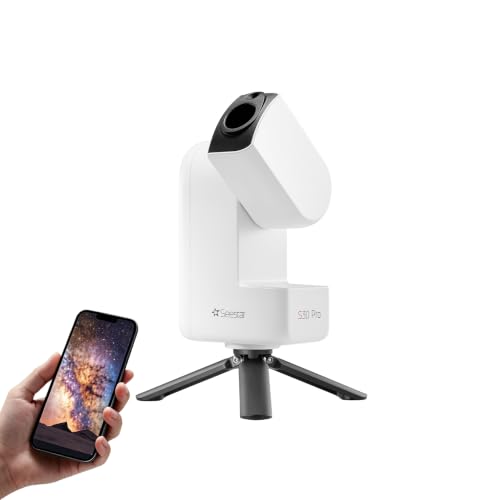
ZWO Seestar S30 Pro Smart Telescope
ZWO Seestar S30 Pro Smart Telescope, App-Controlled Astrophotography | 4K Dual Camera, Auto Tracking & GoTo, One-Tap Capture & Processing, Milky Way & Star Trail, Deep Sky & Wide-Field Imaging
This is a good fit for families who want to see results quickly and who may not own a Dobsonian at all. It is a compact smart telescope that handles pointing, tracking, and image capture through a phone app. It is best understood as an alternative route to astrophotography rather than a tool for adding a camera to a Dobsonian.
Key specs
- Smart telescope with app-controlled GoTo
- Built-in 4K dual camera system
- Automatic tracking and one-tap capture and processing
- Designed for Milky Way, star trail, deep sky, and wide-field imaging
Pros A related read: 6 Best Dobsonian Telescopes for Astrophotography: Picks Compared (2026).
- Setup is much simpler than assembling a manual Dobsonian and aligning a camera
- Automatic tracking helps keep stars sharp during longer captures
- Built-in processing means kids can see finished images the same night
Cons
- It does not teach the manual skills that a Dobsonian builds, such as collimation and star hopping
- Owners who want to work with their own large-aperture Dobsonian will need a different solution
The Dobsonian Telescope Handbook

THE DOBSONIAN TELESCOPE HANDBOOK: A Step by Step Guide to Setup, Collimation, Eyepiece Upgrades, and Clear Stargazing (Stargazing Astrophotography Guides)
This book is for families who already have a Dobsonian or are about to buy one. It covers the practical steps that make a Dobsonian steady and accurate: setup, collimation, choosing eyepieces, and observing well. Good visual technique is the foundation for any later photography work.
Key specs
- Format: printed guide book
- Covers setup, collimation, eyepiece upgrades, and clear-sky observing
- Written as a step-by-step guide for beginners
Pros
- Explains collimation clearly, which matters for sharp images from any reflector
- Helpful for parents who are learning alongside their children
- Low-cost way to improve results from equipment you already own
Cons
- A book cannot capture images or solve tracking problems on its own
- Readers who want a complete imaging system will still need a camera and a mount
DWARFLAB Dwarf 3 Smart Telescope

DWARFLAB Dwarf 3 Smart Telescope, App-Controlled Astrophotography Camera | Portable 3lb Design, 4K Auto-Tracking, AZ/EQ Modes, Built-in Processing, Astronomy Shooting, Wildlife and Panorama Imaging
This option suits families who want a portable device that can be carried to a dark-sky site and used for several kinds of subjects, including astronomy, wildlife, and panoramas. It is a self-contained smart telescope, so it works as an alternative to a Dobsonian for photography rather than an add-on to one.
Key specs
- Portable design, listed at about 3 lb
- 4K auto-tracking camera
- AZ and EQ mounting modes
- Built-in processing for astronomy and other imaging
Pros
- Light enough for family trips to darker locations
- Versatile, with uses beyond the night sky
- App-based control keeps setup approachable for younger users
Cons
- Smart telescopes limit hands-on learning about how a Dobsonian works
- Owners should check battery life and accessories against their planned sessions
Buying Guide
Choosing the right path depends on what you want to learn and how you want to observe. Keep these points in mind.
Selection criteria
- Your existing gear. If you already own a Dobsonian, a book or accessory will help more than a new device.
- Setup time. Manual imaging with a Dobsonian takes patience. Smart systems take less time but teach less about the sky.
- Portability. A Dobsonian is large and heavy. Families who travel often may prefer a compact device.
- Learning goals. Kids who want to understand the sky benefit from manual skills. Kids who want quick results may enjoy automation.
Important features
- Tracking. Long exposures blur unless the telescope follows the sky. Auto-tracking or a motorized mount is essential for deep-sky photos.
- Collimation. A reflector must be properly aligned to produce sharp images. Check this before every session.
- Camera compatibility. Confirm that a camera or adapter fits your eyepiece holder or focuser.
Specs to check
- Aperture (larger aperture gathers more light)
- Focal length and focal ratio
- Mount type (alt-azimuth or equatorial)
- Battery life and power options for field use
- Included software or app support
Choosing by need
If your family wants photos in one evening with little setup, a smart telescope is the most direct route. If you own a Dobsonian and want to get sharper views and better results, a guide book is a practical first step. If you travel and want versatility, a light, portable smart system is worth comparing.
Things to watch out for
- Light pollution from street lights and nearby towns will limit faint detail in any photo.
- Dew can form on optics on cold nights. Plan for a dew shield or heater if you observe for long periods.
- Children should never look at or aim any telescope at the Sun without proper solar filtration. Consult a qualified astronomy educator if you are unsure about safe solar viewing.
FAQ
Can you do astrophotography with a Dobsonian telescope?
Yes, but it is more challenging than with a equatorial or smart telescope. Dobsonians are alt-azimuth mounts, so the sky appears to rotate in the field of view. Short exposures of the Moon and bright planets are the easiest starting point. Deep-sky imaging usually needs a tracking system.
What camera works best with a Dobsonian?
Many beginners use a planetary-style camera or a DSLR attached through an adapter. Choose a camera that matches your focuser and the subjects you plan to shoot. Check the manufacturer’s compatibility notes before buying.
Do I need a tracking mount for a Dobsonian?
For short exposures of the Moon and planets, no. For longer exposures of nebulae and galaxies, tracking is strongly recommended. Motorized or computer-controlled options exist for Dobsonians, though they add cost and setup steps.
Why are my photos blurry?
Common causes include poor collimation, unstable focus, vibration from wind or touching the tube, and atmospheric turbulence. Check collimation first, then use a remote shutter or timer to reduce shake.
Is a smart telescope better than a Dobsonian for kids?
It depends on the goal. Smart telescopes produce photos quickly with little setup. A Dobsonian teaches observing skills and star navigation. Many families use both over time.
How dark should my sky be?
Dark-sky sites give the best results for faint objects like galaxies and nebulae. Suburban skies still work well for the Moon, planets, and bright star clusters.
Do I need special software?
Basic capture software is often included with cameras or smart systems. Stacking software, which combines many frames into one image, is commonly used by astrophotographers to reduce noise and improve detail.
Conclusion
Astrophotography with a Dobsonian telescope is achievable, especially for bright targets like the Moon and planets. For families who want quick, reliable night-sky photos with little setup, the ZWO Seestar S30 Pro Smart Telescope is the most direct option. For families who already own a Dobsonian and want to strengthen their observing and collimation skills, The Dobsonian Telescope Handbook is a useful companion. For families who want a portable, versatile smart system for travel, the DWARFLAB Dwarf 3 Smart Telescope fits that need. Match your choice to what your family most wants to learn, and enjoy the process as much as the results.
Related reading
- Zhumell Z130 Dobsonian Telescope: Setup, Use and Buying Guide
- Zhumell 10 Dobsonian Telescope: 7 Best Options Compared for 2026
- Used Dobsonian Telescope for Sale: 6 Things to Check Before You Buy
- Used 8 Inch Dobsonian Telescope: 7 Best Picks Compared (2026)
About Owen Palmer
Owen Palmer is part of our editorial team and reviews and edits our astronomy for kids, teens & families guides, checking product details against manufacturer specifications and owner feedback.
About the author
Owen Palmer writes reviews and buying guides for Youth in Astronomy.