7 Best Christmas Telescopes for Kids Lesson Picks for 2026
Looking for a christmas telescope for kids lesson? Compare seven beginner picks by aperture, mount, accessories and ease of use to choose the right gift.
 By Caleb Morgan
Updated November 24, 2026
 By Caleb Morgan
Updated November 2026
Shopping for a christmas telescope for kids lesson can feel overwhelming, especially if you have never set up a telescope before. The goal of this list is simple: help parents, grandparents and teachers find a telescope that a child can actually use, understand and enjoy during a lesson or on a winter night in the backyard. We compared each model on a few practical points: how easy it is to assemble, how steady the mount feels for a young user, whether the included eyepieces give useful magnification, how well the package supports learning (star maps, guides or activities), and how well the product fits a family setting. Here are our seven picks, ordered by how well they match those criteria.
Our top picks at a glance
- 1TOP CHOICEBest overallGskyer Telescope, 70mm Aperture 400mm AZ Mount Astronomical Refracting TelescopeView on Amazon
- 2
 TOP CHOICEBest for classroom-style lessonsNASA Lunar Telescope for Kids Ages 8-12 with Tripod and Finder ScopeView on Amazon
- 3
 TOP CHOICEBest for travel and phone photosTelescope for Kids and Adults, 70/500 Astronomy Telescope for BeginnersView on Amazon
- 4
 Best budget pickTelescope for Kids, 50mm 100x Christmas Red Beginner Telescope ToyView on Amazon
- 5
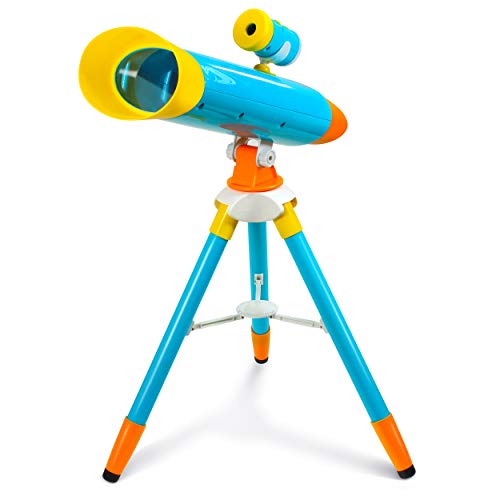 Best for the youngest learnersLittle Experimenter Projector Telescope, 24 Space ImagesView on Amazon
- 6
 Best for extra eyepiecesTelescope for Kids, Space Toys for Kids with Compass and 3 EyepiecesView on Amazon
- 7
 Best premium optionDianfan Telescope for Kids and Adults, 80mm 500mm Portable RefractorView on Amazon
Our Top Picks
Quick Comparison
| Product | Best for | Key feature |
|---|---|---|
| Gskyer 70mm 400mm Refracting Telescope | Overall family use and travel | 70mm refractor with AZ mount and carry bag |
| NASA Lunar Telescope for Kids | Lesson-style learning, ages 8–12 | Tabletop tripod and two eyepieces |
| Telescope for Kids and Adults 70/500 | Phone photos and landscape viewing | Phone adapter with tripod |
| 50mm 100x Christmas Red Beginner Telescope | Tight budgets and first-time gifts | Tripod, two eyepieces and finder scope |
| Little Experimenter Projector Telescope | Ages 3–12 and early STEM | Projects 24 space images |
| Space Toys Telescope with Compass | Kids who want variety in magnification | Three eyepieces and a compass |
| Dianfan 80mm 500mm Portable Refractor | Older kids and serious beginners | 80mm fully multi-coated optics |
Gskyer Telescope, 70mm Aperture 400mm AZ Mount Astronomical Refracting Telescope
Gskyer Telescope, 70mm Aperture 400mm AZ Mount Astronomical Refracting Telescope for Kids Beginners – Travel Telescope with Carry Bag, Phone Adapter and Wireless Remote.
Best for: Overall family use and travel
This refractor suits families who want one telescope for backyard viewing, short trips and occasional lessons. Its 70mm objective gathers more light than the smaller department-store models, which helps the Moon and bright planets look clearer to a beginner.
Key specs:
- 70mm aperture refractor
- 400mm focal length
- AZ (altazimuth) mount
- Ships with a carry bag and phone adapter
Pros:
- Larger aperture than many starter scopes
- Carry bag makes it easy to move between rooms or trips
- Phone adapter supports simple photos of the Moon
Cons:
- The AZ mount takes practice to track objects smoothly
- Young children may need help with focusing at first
Bottom line: Best for families who want one all-around scope that works in the yard and on the road.
View on AmazonNASA Lunar Telescope for Kids Ages 8-12 with Tripod and Finder Scope
NASA Lunar Telescope for Kids Ages 8-12 with Tripod and Finder Scope | 90x Magnification, Two Eyepieces, Tabletop Tripod, Beginner Astronomy, Space Toys, NASA Birthday Gift
Best for: Lesson-style learning, ages 8–12
This telescope fits a classroom or homeschool setting well. The NASA branding gives it a space-education theme, and the two eyepieces let a child compare magnifications during a short lesson.
Key specs:
- Listed at 90x maximum magnification
- Two eyepieces
- Tabletop tripod
- Finder scope included
Pros:
- Tabletop tripod is easy to set up on a desk or table
- Two eyepieces support simple comparison activities
- Space theme appeals to kids who love NASA content
Cons:
- Tabletop tripods are less steady outdoors in wind
- High listed magnification is hard to use in practice with small optics
Bottom line: A good pick for a classroom, a homeschool lesson or an indoor-to-window viewing setup.
View on AmazonTelescope for Kids and Adults, 70/500 Astronomy Telescope for Beginners
Telescope for Kids and Adults, 70/500 Astronomy Telescope for Beginners | Kids' Christmas Gift, Refractor Telescope with Phone Adapter and Tripod, Outdoor Stargazing and Landscape Viewing
Best for: Phone photos and landscape viewing
This model is designed for families who want to capture what they see. Its phone adapter and tripod make it useful for daytime landscape views as well as nighttime targets like the Moon.
Key specs:
- 70mm aperture refractor
- 500mm focal length
- Tripod and phone adapter included
Pros:
- Phone adapter makes it easy to share views
- Works for both sky and landscape viewing
- Good light-gathering for its size
Cons:
- Phone adapters can slip if the phone is not seated firmly
- Tripod height may be low for taller adults
Bottom line: Ideal for families who want to take photos and mix daytime scenery with night-sky viewing.
View on AmazonTelescope for Kids, 50mm 100x Christmas Red Beginner Telescope Toy
Telescope for Kids, 50mm 100x Christmas Red Beginner Telescope Toy with Tripod, 2 Eyepieces & Finder Scope, STEM Educational Gift Set with Poster & Stickers for Boys & Girls Ages 6-12
Best for: Tight budgets and first-time gifts
This is a straightforward starter scope with a festive red finish, which makes it a natural holiday gift. It comes with a poster and stickers, so it can double as a simple STEM activity for ages 6 to 12.
Key specs:
- 50mm aperture
- Listed at 100x maximum magnification
- Tripod, two eyepieces and finder scope
- Includes poster and stickers
Pros:
- Simple setup suitable for young children
- Festive look works well as a gift
- Extra printed materials support a short lesson
Cons:
- A 50mm aperture gathers less light than larger refractors
- Magnification numbers on toy-style scopes are often optimistic
Bottom line: Best for families who want a low-stress first telescope with festive appeal.
View on AmazonLittle Experimenter Projector Telescope, 24 Space Images
Little Experimenter Projector Telescope, 24 Space Images, STEM Kids 3-12 | STEM Science Toy, Learning Gift for Boys & Girls Ages 3-12
Best for: Ages 3–12 and early STEM
This is less a true optical telescope and more a projection toy. It works well for very young children who are not yet ready to focus a real telescope, and it introduces space images in a playful way.
Key specs:
- Includes 24 space images
- Designed for ages 3–12
Pros:
- No focusing or sky-viewing skills required
- Good for indoor lessons and early curiosity
- Simple enough for preschool-aged children
Cons:
- Does not show real celestial objects through the sky
- Older kids may quickly outgrow it
Bottom line: A gentle introduction for little children, but not a substitute for a real telescope.
View on AmazonTelescope for Kids, Space Toys for Kids with Compass and 3 Eyepieces
Telescope for Kids, Space Toys for Kids Includes Compass & 3 Eyepieces, Great Portable Telescope as Astronomy Gifts, Educational STEM Kit for Boys and Girls to See Moon
Best for: Kids who want variety in magnification
This kit gives a child more to explore than a single eyepiece. The compass adds a navigation element, which can tie into a lesson on directions and where to look in the sky.
Key specs:
- Three eyepieces
- Built-in compass
- Portable design
Pros:
- Three eyepieces allow comparison of magnification
- Compass supports directional learning
- Portable for use at home or on trips
Cons:
- Lightweight tripods can wobble with a young user
- Specifications vary between listings, so check the box contents
Bottom line: Good for curious kids who like experimenting with different views and directions.
View on AmazonDianfan Telescope for Kids and Adults, 80mm 500mm Portable Refractor
Dianfan Telescope for Kids & Adults, 80mm 500mm Portable Refractor, Purple | High Powered Astronomy Travel Telescope for Beginners, Fully Multi-Coated Optics, Tripod, Phone Adapter, Stickers & Backpac
Best for: Older kids and serious beginners
This is the most capable scope on the list by aperture. It suits older children and parents who want a bit more light for planets and the Moon, and who are willing to spend time learning the setup.
Key specs:
- 80mm aperture refractor
- 500mm focal length
- Fully multi-coated optics
- Tripod, phone adapter and backpack included
Pros:
- Larger aperture for brighter views
- Multi-coated optics help with contrast
- Backpack makes transport easy
Cons:
- Heavier than the smaller starter models
- May be more than a young child needs at first
Bottom line: Best for older kids and families ready to grow into a more serious beginner scope.
View on AmazonBuying Guide
Aperture and Light Gathering
Aperture, the diameter of the main lens or mirror, controls how much light the telescope collects. A 50mm to 70mm refractor shows the Moon, Jupiter’s largest moons and bright star clusters well. Larger apertures give brighter views but make the telescope heavier.
Good picks for this: Gskyer Telescope 70mm, Dianfan 80mm
Magnification Claims
Many toy telescopes advertise very high magnification, such as 100x or 90x. Useful magnification depends on aperture, and extremely high numbers often produce dim, blurry images. Look for a scope that gives a clear image at moderate power.
Good picks for this: NASA Lunar Telescope, 50mm 100x Christmas Red
Mount Type and Stability
An AZ mount moves up-down and left-right and is simple for beginners. Tabletop tripods work for indoor lessons but can shake outdoors. A sturdier tripod helps young children keep a target centered.
Good picks for this: Telescope for Kids and Adults 70/500, Gskyer Telescope
Eyepieces and Accessories
Two or three eyepieces let kids compare magnifications. A finder scope helps aim the telescope before looking through the main tube. Phone adapters support photos and sharing the view with siblings.
Good picks for this: Space Toys Telescope with Compass, Telescope for Kids and Adults 70/500
Age Fit and Ease of Setup
Children under six usually need a simple, projection-style or very light toy. Kids eight and older can handle focusing and basic alignment. Choose a scope the child can set up with supervision and without frustration.
Good picks for this: Little Experimenter Projector Telescope, NASA Lunar Telescope
Portability and Storage
If you plan to move the telescope between rooms, a car or a campsite, a carry bag or backpack matters. Lighter refractors are easier to carry, but very light models may need a steadier base.
Good picks for this: Gskyer Telescope, Dianfan 80mm
Durability and Care
Keep lenses covered when not in use and avoid touching the glass. Store the telescope in a dry place, since humidity can fog optics. Plastic tripods and focuser knobs can wear down, so check fasteners regularly.
Good picks for this: Dianfan 80mm, Telescope for Kids 50mm 100x
FAQ
What is the best age for a child to start using a telescope?
Many children can begin around age six with simple refractors and supervision. Younger children often enjoy projection-style toys more until they can focus and hold a target steady.
What magnification does a kids telescope need?
Moderate magnification, often around 30x to 60x, usually gives the clearest views for beginners. Very high numbers on the box rarely translate into sharp images.
Can kids see planets with a beginner telescope?
Kids can see Jupiter as a small disk with its largest moons and Saturn’s rings under good conditions. Larger apertures show more detail, so expect the view to be modest with a small refractor.
Do I need a tripod that is tall enough for adults?
Yes, if adults will also observe. Tabletop tripods are fine for children at a table, but a taller floor tripod is more comfortable for standing adults.
Is a phone adapter worth it for a family telescope?
A phone adapter is useful for photos and sharing views, especially with children who want to show friends. Confirm that your phone fits the adapter’s size range before buying.
Should I buy a telescope with a red-light or night-vision feature?
A red flashlight helps preserve night vision while reading star charts. Many families use a simple red-filtered light separately from the telescope itself.
Conclusion
For most families, the Gskyer 70mm refractor is a balanced all-around choice, with a larger aperture and a carry bag for trips. If the goal is classroom-style lessons, the NASA Lunar Telescope and its tabletop tripod fit well. Families who want photos and landscape views should consider the Telescope for Kids and Adults 70/500. A tight budget or festive gift points toward the 50mm Christmas Red scope, while very young children may enjoy the Little Experimenter projector. Older kids ready for more light can grow into the Dianfan 80mm. Match the telescope to the child’s age, the setting where it will be used and how much setup time the family can manage.
Sources
- Current sky events, Moon phases and educational resources for young observers (nasa.gov)
- Beginner guidance on telescope types, observing targets and star-party etiquette
- Safety guidance for toys and children's products, including small parts and age labeling (cpsc.gov)
Before you buy: helpful guides
Related reading
- Top 5 Telescopes with 30x Magnification for Kids Worth Considering in 2026
- Top 5 DIY Telescope Kits for Kids Worth Considering in 2026
- Saxon Novo 607AZ Refractor Kids Telescope: Is It Right for Your Family?
About Caleb Morgan
Caleb Morgan is part of our editorial team and reviews and edits our astronomy for kids, teens & families guides, checking product details against manufacturer specifications and owner feedback.
About the author
Caleb Morgan writes reviews and buying guides for Youth in Astronomy.