3 Best Binocular Tripod Mount Options for Steady Stargazing (2026)
Looking for the best binocular tripod mount for stargazing? Compare three steady, well-reviewed options and find the right fit for your binoculars.
 By Owen Palmer
Updated November 11, 2026
 By Owen Palmer
Updated November 2026
Choosing the best binocular tripod mount can make the difference between shaky, frustrating night sky views and calm, enjoyable observing. Holding a pair of binoculars steady for more than a few seconds is hard, especially at high magnification, and fatigue sets in quickly. A good mount takes the weight off your arms, keeps the field of view still, and lets you spend more time looking at the Moon, star clusters, and the bright moons of Jupiter. This guide covers three options we selected by checking manufacturer specifications, brand reputation, and the patterns owners commonly report, so you can match a mount to your binoculars, your tripod, and your observing style.
Our top picks at a glance
- 1TOP CHOICEBest overallSnapzoom Universal Binocular Tripod MountView on Amazon
- 2
 Best for heavy-duty, precise aimingCelestron Heavy-Duty Alt-Azimuth Tripod for Spotting Scopes & TelescopesView on Amazon
- 3
 Best for larger binoculars on a standard tripodUniversal Binocular Mount (UBM) with Far-SightView on Amazon
Our Top Picks
Quick Comparison
| Product | Best for | Key feature |
|---|---|---|
| Snapzoom Universal Binocular Tripod Mount | Beginners and families with a single pair of binoculars | Simple universal adapter for standard tripod threads |
| Celestron Heavy-Duty Alt-Azimuth Tripod | Larger binoculars and steady, fine-tuned aiming | Slow-motion controls in altitude and azimuth |
| Universal Binocular Mount (UBM) with Far-Sight | Mid-to-large binoculars needing a parallelogram design | Standard parallelogram with 12 lb capacity |
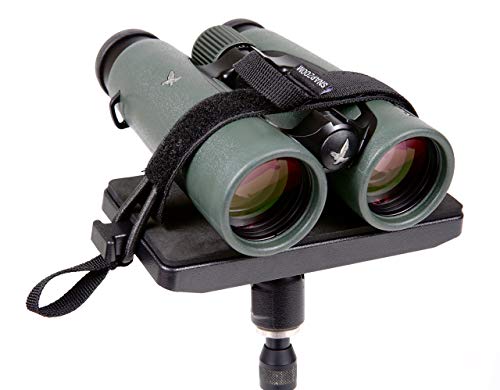
Snapzoom Universal Binocular Tripod Mount
Snapzoom Universal Binocular Tripod Mount
Best for: Beginners and families who want a simple, affordable way to mount one pair of binoculars on a tripod.
This is a straightforward adapter that threads onto a standard camera-style tripod and holds binoculars at a comfortable height. It suits families who are just starting out and want to see whether a mounted setup improves their viewing before investing in heavier gear.
Key specs
- Designed as a universal binocular tripod mount
- Uses a standard tripod connection
- Intended for everyday handheld-size binoculars
Pros
- Easy to set up with no tools required
- Takes the strain off your arms during long observing sessions
- Works with a wide range of common tripods
Cons
- Limited adjustment compared with alt-azimuth mounts
- Not intended for very heavy, high-magnification binoculars
Bottom line: A good first step for families who want steadier views without a large investment. Choose a sturdier mount if you use heavier binoculars.
View on AmazonCelestron Heavy-Duty Alt-Azimuth Tripod for Spotting Scopes & Telescopes
Celestron Heavy-Duty Alt-Azimuth Tripod for Spotting Scopes & Telescopes | Heavy-Duty Mount, Precision Slow-Motion Controls in Altitude and Azimuth, Built for Large Optics, Smooth Tracking
Best for: Larger binoculars and anyone who wants precise, controlled aiming in altitude and azimuth.
This heavy-duty alt-azimuth tripod is built for large optics, and its slow-motion controls let you make small, deliberate adjustments. It suits observers who plan to track objects across the sky or who use binoculars heavier than the typical handheld size.
Key specs
- Alt-azimuth design with slow-motion controls in altitude and azimuth
- Heavy-duty construction intended for large optics
- Designed for smooth tracking
Pros
- Precise, fine-tuned aiming that helps with tracking
- Sturdy base suited to heavier loads
- Smooth movement reduces vibration when you adjust
Cons
- Heavier and bulkier to transport than simple mounts
- Takes a little practice to master the slow-motion controls
Bottom line: Best for observers with heavier binoculars who value controlled aiming and are willing to carry a larger setup.
View on AmazonUniversal Binocular Mount (UBM) with Far-Sight
Universal Binocular Mount (UBM) with Far-Sight. Standard Parallelogram with 12 Pound Capacity.
Best for: Mid-to-large binoculars that need a parallelogram-style mount to stay balanced and steady.
This parallelogram mount is designed around a 12-pound capacity, which makes it a practical match for larger binoculars. Parallelogram designs keep the binoculars pointing in a consistent direction as you move them, which many observers find helpful for scanning the sky.
Key specs
- Standard parallelogram design
- 12-pound capacity as stated in the listing
- Universal fit for common binocular bodies
Pros
- Higher stated capacity suits larger binoculars
- Parallelogram motion helps keep views consistent while scanning
- Works with standard tripods
Cons
- Setup takes more time than simple adapters
- Balance needs checking when switching between binoculars
Bottom line: A strong choice for owners of larger binoculars who want a balanced, adjustable parallelogram mount.
View on AmazonBuying Guide
Weight Capacity and Binocular Size
Check the stated capacity of the mount against the combined weight of your binoculars, including any strap or cap. Manufacturers specify maximum loads for a reason. Leaving a safety margin helps prevent slipping and strain on the threads. Larger binoculars, such as those with 20x or 25x magnification and 80 to 100 mm objectives, usually call for a sturdier design.
Good picks for this: Celestron Heavy-Duty Alt-Azimuth Tripod for Spotting Scopes & Telescopes, Universal Binocular Mount (UBM) with Far-Sight
Mount Type: Simple Adapter, Alt-Azimuth, or Parallelogram
Simple adapters are easiest to set up and cost the least in complexity. Alt-azimuth mounts give you precise control over both up-down and side-to-side movement, which helps with tracking. Parallelogram mounts keep the binoculars pointed consistently as you scan, which many observers prefer for wide-field sky viewing.
Good picks for this: Snapzoom Universal Binocular Tripod Mount, Universal Binocular Mount (UBM) with Far-Sight
Tripod Compatibility and Thread Size
Most binocular mounts connect to a tripod through a standard threaded socket, commonly the 1/4-inch or 3/8-inch size used by cameras and spotting scopes. Confirm the thread size on your tripod before buying. A tripod that is too light for your setup will wobble, so pair the mount with a tripod rated for at least the same load.
Good picks for this: Snapzoom Universal Binocular Tripod Mount, Celestron Heavy-Duty Alt-Azimuth Tripod for Spotting Scopes & Telescopes
Stability and Vibration Control
A steady mount matters more than almost anything else at high magnification. Look for sturdy metal construction, firm locking knobs, and a wide base on the tripod. Keep the tripod legs fully extended and locked, and avoid placing the setup on soft ground, which can sink unevenly and shift your view.
Good picks for this: Celestron Heavy-Duty Alt-Azimuth Tripod for Spotting Scopes & Telescopes
Ease of Adjustment
Smooth, controllable movement helps you find and follow objects. Slow-motion controls let you make small corrections without bumping the binoculars off target. If you are new to astronomy, a mount that is simple to adjust will let you focus on learning the sky rather than fighting your gear.
Good picks for this: Celestron Heavy-Duty Alt-Azimuth Tripod for Spotting Scopes & Telescopes, Snapzoom Universal Binocular Tripod Mount
Portability and Storage
If you travel to dark-sky sites or move your gear often, weight and folded size matter. A lighter adapter is easier to carry, while a heavy-duty alt-azimuth setup stays at home more often. Consider how far you will walk from the car and whether the mount fits in your existing gear bag.
Good picks for this: Snapzoom Universal Binocular Tripod Mount, Universal Binocular Mount (UBM) with Far-Sight
Care and Maintenance
Keep threads clean and dry, and avoid overtightening knobs, which can strip threads over time. After damp nights, wipe metal parts to prevent corrosion, and store the mount in a padded case. Check locking knobs periodically so they hold firmly. Regular care helps a mount stay steady for years.
Good picks for this: Celestron Heavy-Duty Alt-Azimuth Tripod for Spotting Scopes & Telescopes, Universal Binocular Mount (UBM) with Far-Sight
FAQ
Do I need a binocular tripod mount for stargazing?
You do not need one, but a mount makes a noticeable difference at higher magnification. Holding binoculars by hand causes shaking that blurs fine detail. A mount lets you observe for longer with less fatigue. For a deeper look at setup, see Binocular with Tripod Mount: How to Set One Up for Stargazing.
What is the difference between a binocular mount and a tripod?
The tripod is the stand that sits on the ground. The binocular mount is the adapter that attaches your binoculars to the tripod head. Many mounts thread onto a standard tripod, so you can often reuse a camera tripod you already own.
Can I use a camera tripod with a binocular mount?
Often yes, as long as the thread size matches and the tripod can carry the load. Check the mount’s stated capacity and make sure the tripod is stable enough for your binoculars. A flimsy tripod will transmit vibration. You can read more in Binocular Tripod Mount for Astronomy: Steps to Steady Views (2026).
What size binoculars work best with a tripod mount?
Many observers use 10×50 or 15×70 binoculars with a mount, and larger 20×80 models benefit even more. Heavier binoculars need a mount with a higher capacity. Compare your binoculars’ weight to the mount’s specifications. For ideas, see 6 Best 10×50 Binoculars for Astronomy: Our Picks Compared.
How do I set up a binocular mount for the first time?
First, attach the mount to the tripod and tighten it firmly. Next, fit the binoculars into the cradle and lock them down. Level the tripod, then adjust the head so the binoculars point at a bright object such as the Moon. Finally, fine-tune focus and eyepiece alignment. A guided walkthrough is in Snapzoom Universal Binocular Tripod Mount: Setup Steps for Steady Sky Views.
Is a parallelogram mount better than an alt-azimuth mount?
Neither is better for every observer. Parallelogram mounts keep your view consistent while scanning, which suits wide-field sky sweeps. Alt-azimuth mounts give precise, controlled aiming for tracking specific objects. Your observing style should guide the choice. The differences are explained in Binocular Parallelogram Mount Plans: Build a Steady Star-Viewing Rig.
Can children use a binocular tripod mount safely?
Yes, with supervision. Keep the tripod on level ground, never reach under a loaded mount, and check that locking knobs are tight before letting anyone look through the binoculars. Keep fingers clear of moving parts and avoid pointing optics at the Sun. For general guidance on safe eye practices, consult an eye-care professional or your local astronomy club.
How much weight should a binocular mount hold?
Check the manufacturer’s stated capacity and choose a mount rated above your binoculars’ weight, with a comfortable margin. Include any accessories, such as dew shields or cases you leave attached. Staying within the rated limit protects both your binoculars and the mount.
Conclusion
For most beginners and families, the Snapzoom Universal Binocular Tripod Mount is a practical first choice because it is simple and easy to set up. Observers with heavier binoculars who want precise, controlled aiming will likely prefer the Celestron Heavy-Duty Alt-Azimuth Tripod for Spotting Scopes & Telescopes. The Universal Binocular Mount (UBM) with Far-Sight suits owners of larger binoculars who value a balanced parallelogram design. Start by matching the mount’s stated capacity and thread size to your gear, then choose the adjustment style that fits how you like to observe.
Sources
- Background on the night sky, observing targets, and safe viewing practices for beginners (nasa.gov)
- Guidance on choosing and using optics for amateur astronomy and club-based learning
- Practical resources on binocular and telescope observing for new astronomers
About Owen Palmer
Owen Palmer is part of our editorial team and reviews and edits our astronomy for kids, teens & families guides, checking product details against manufacturer specifications and owner feedback.
About the author
Owen Palmer writes reviews and buying guides for Youth in Astronomy.