5 Best Beginner Telescopes with Camera Mount Options for Stargazers (2026)
Compare five beginner telescope with camera mount options for families and young astronomers. See specs, pros, cons and who each one suits best.

 By Naomi Hayes
Updated November 2026
Choosing a beginner telescope with camera mount is less about finding the most powerful instrument and more about finding one a young observer will actually use. A camera mount turns a night of looking into a night of capturing: a phone, a dedicated eyepiece camera, or a small sensor can record what the eyepiece shows so the family can review it later, share it, or compare it with a star chart. The picks below were chosen by checking manufacturer specifications, brand reputation, and the patterns owners commonly describe in their feedback. Key criteria were ease of setup, aperture (light-gathering size), mount type, how well the system handles photography, and how easily kids can learn it without an adult doing everything for them.
Our top picks at a glance
- 1TOP CHOICEBest overallCelestron AstroMaster 130EQ Telescope for Deep-Sky BeginnersView on Amazon
- 2
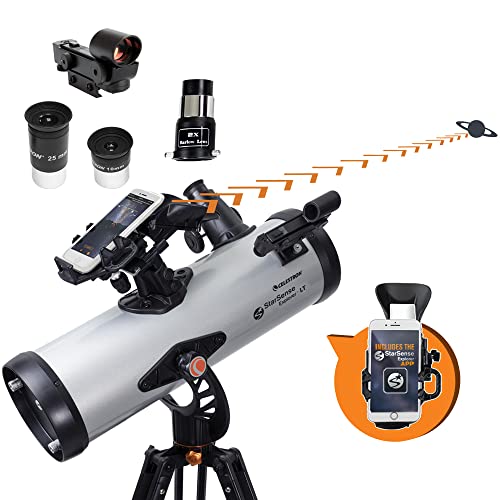 TOP CHOICEBest for guided beginnersCelestron StarSense Explorer LT 114AZ Newtonian Smartphone Guided TelescopeView on Amazon
- 3
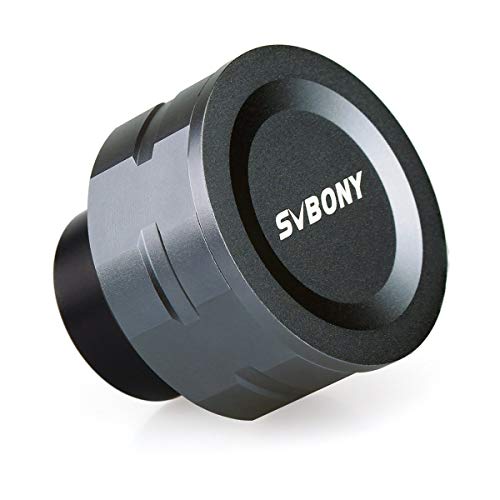 TOP CHOICEBest budget pick for camera add-onsSVBONY SV105 Telescope Camera, 1.25" IMX307 CMOS Color Eyepiece CameraView on Amazon
- 4
 Best for automatic object findingCelestron NexStar 5SE Schmidt-Cassegrain Computerized TelescopeView on Amazon
- 5
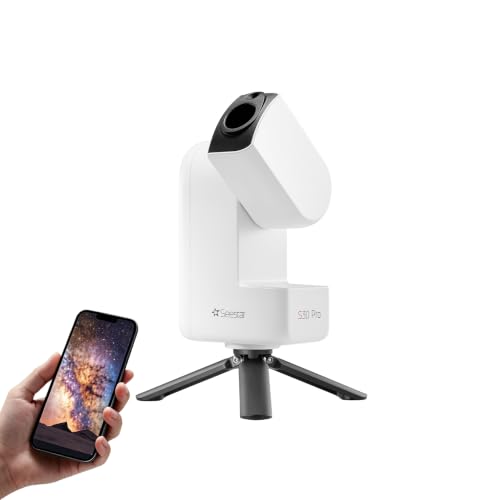 Best for hands-off astrophotographyZWO Seestar S30 Pro Smart Telescope, App-Controlled AstrophotographyView on Amazon
Our Top Picks
Quick Comparison
| Product | Best for | Key feature |
|---|---|---|
| Celestron AstroMaster 130EQ | Beginners who want larger optics on a manual mount | 130mm reflector on a German equatorial mount |
| Celestron StarSense Explorer LT 114AZ | Kids who like using a phone to find targets | Smartphone app sky alignment |
| SVBONY SV105 Telescope Camera | Families adding photography to an existing scope | 1.25-inch color eyepiece camera with USB output |
| Celestron NexStar 5SE | Observers who want automatic pointing | GoTo mount with a large object database |
| ZWO Seestar S30 Pro | Families who want simple one-tap imaging | Integrated camera with auto tracking and app capture |
Celestron AstroMaster 130EQ Telescope for Deep-Sky Beginners
Celestron AstroMaster 130EQ Telescope for Deep-Sky Beginners | Large 130mm Optics, Bright Moon & Deep-Sky Views, Perfect First Telescope, German Equatorial Mount with Easy Manual Controls
Best for: Beginners who want larger optics and a mount they can learn to control by hand
This is a strong first telescope for a student who is ready to learn how the sky moves. The 130mm mirror gathers far more light than a typical small refractor, which helps with the Moon, bright planets, and some deep-sky objects. The equatorial mount rewards patience, and a family that enjoys learning together will get the most from it.
Key specs For a deeper look, Alt Azimuth Telescope Mount: How It Works and Who Should Use One covers this in detail.
- 130mm (about 5.1-inch) reflector optics
- German equatorial mount with manual slow-motion controls
- Designed for visual observing with an eyepiece camera or phone adapter
Pros
- Large aperture shows more detail on the Moon and planets than smaller beginner scopes
- Equatorial mount teaches real sky navigation skills
- Works well for family viewing sessions with several eyepieces
Cons
- Setup and polar alignment take time for young users
- Heavier to carry outside than compact tabletop options
Bottom line: A good pick for a motivated young observer and a parent willing to learn alongside them. Ideal when the goal is learning the sky rather than instant results.
View on AmazonCelestron StarSense Explorer LT 114AZ Newtonian Smartphone Guided Telescope
Celestron StarSense Explorer LT 114AZ Newtonian Smartphone Guided Telescope | Smartphone App Sky Navigation, Manual Reflector Telescope, Beginner Deep-Sky Telescope, Bright Celestial Views, Portable
Best for: Kids who want help finding targets using a smartphone
This telescope pairs with a smartphone app that reads the sky and guides the user toward objects. For a child who gets frustrated when nothing is where they expect, the app removes much of that friction. It is also portable enough to take to a park or a campsite.
Key specs
- 114mm Newtonian reflector optics
- Altitude-azimuth mount
- Smartphone app sky alignment for guided navigation
Pros
- App guidance makes finding objects far less frustrating for new users
- Compact and easier to carry than larger reflectors
- Good starting point for deep-sky targets like star clusters
Cons
- Depends on a phone and app, which some families prefer to limit
- Manual mount can make high-power planetary viewing less steady
Bottom line: Best for families who want quick success on the first night and are comfortable with a phone-assisted approach.
View on AmazonSVBONY SV105 Telescope Camera, 1.25″ IMX307 CMOS Color Eyepiece Camera
SVBONY SV105 Telescope Camera, 1.25" IMX307 CMOS Color Eyepiece Camera | Plug and play, M28.5×0.6 Thread, USB 2.0 Electronic Telescope Eyepiece for Telescope, Suitable for Astrophotography Beginners
Best for: Families adding photography to a telescope they already own
This is an eyepiece camera rather than a telescope. It slides into a 1.25-inch eyepiece holder and connects to a computer or compatible device over USB, letting kids record what they see. It is a practical choice for a beginner telescope with camera mount setup when budget is a concern and an existing scope has a standard focuser.
Key specs
- 1.25-inch barrel fitting standard eyepiece holders
- IMX307 CMOS color sensor
- USB 2.0 connection
Pros
- Lets an existing telescope become a photography system
- Plug-and-play setup on most computers
- Useful for recording planets and the Moon during live viewing
Cons
- Requires a computer or capable device, which means extra steps for young users
- Deep-sky photography still needs a stable mount and longer exposures
Bottom line: The right add-on for a family that already has a telescope and wants to start capturing images without buying a new scope.
View on AmazonCelestron NexStar 5SE Schmidt-Cassegrain Computerized Telescope
Celestron NexStar 5SE Schmidt-Cassegrain Computerized Telescope | Fully Automated GoTo Mount with SkyAlign, Compact Schmidt-Cassegrain Design, Great for Beginners, 40,000+ Object Database
Best for: Observers who want the telescope to find objects automatically
The NexStar 5SE is a computerized GoTo telescope. After a short alignment, the mount can slew to thousands of objects in its database. For a beginner who wants to spend more time observing and less time hunting, it removes a large part of the learning curve, and it accepts camera attachments for photography.
Key specs
- Schmidt-Cassegrain optical design in a compact tube
- Computerized GoTo mount with SkyAlign alignment
- Object database of more than 40,000 entries
Pros
- Automatic pointing makes it easy to find planets, nebulae, and clusters
- Compact tube is manageable for kids to carry with supervision
- Large database keeps observing sessions varied
Cons
- Needs a power source, typically batteries or a power adapter
- Alignment and handset menus take some time to master
Bottom line: A good fit for a child who loves objects with names and wants to explore a long target list, with a parent helping through the first alignments.
View on AmazonZWO Seestar S30 Pro Smart Telescope, App-Controlled Astrophotography
ZWO Seestar S30 Pro Smart Telescope, App-Controlled Astrophotography | 4K Dual Camera, Auto Tracking & GoTo, One-Tap Capture & Processing, Milky Way & Star Trail, Deep Sky & Wide-Field Imaging
Best for: Families who want simple one-tap astrophotography
The Seestar is a smart telescope built around its camera. Rather than asking users to focus on eyepiece viewing, it captures images through an app, tracks targets automatically, and processes results. For a family whose goal is bright, shareable pictures of the Milky Way and deep-sky objects, it is one of the most direct routes.
Key specs
- Integrated 4K-capable camera system
- Automatic tracking and GoTo targeting through the app
- One-tap capture and on-device processing
Pros
- Very low learning curve for capturing images
- Automatic tracking helps produce sharper long exposures
- Strong option for wide-field and deep-sky imaging
Cons
- Less of a traditional visual telescope, so kids who want to look through an eyepiece may miss that experience
- Relies on the app and its ecosystem
Bottom line: Best for families who care most about photos and want to skip the technical steps. Good if the goal is results from the first clear night.
View on AmazonBuying Guide
Aperture and Optical Design
Aperture, the diameter of the main optic, determines how much light the telescope gathers. Larger apertures show fainter objects and more detail on the Moon and planets. Reflectors and Schmidt-Cassegrains generally offer more aperture per dollar than refractors, while refractors are often simpler to maintain. For a beginner, a 100mm to 130mm class instrument is a common sweet spot for a balance of size and performance.
Good picks for this: Celestron AstroMaster 130EQ, Celestron NexStar 5SE
Mount Type: Manual, Equatorial, or GoTo
A manual alt-azimuth mount is the easiest to understand. An equatorial mount tracks the sky more smoothly for photography but takes practice to align. A GoTo mount points automatically after alignment. Choose based on the child’s patience: manual for curiosity-driven learners, GoTo for those who want to see more objects quickly.
Good picks for this: Celestron StarSense Explorer LT 114AZ, Celestron NexStar 5SE
Camera Compatibility
Check whether the telescope has a standard 1.25-inch eyepiece holder or a dedicated camera port. Many eyepiece cameras and phone adapters use this size. Also confirm whether you need a laptop, tablet, or phone, and whether the app works on your device.
Good picks for this: SVBONY SV105 Telescope Camera, ZWO Seestar S30 Pro
Tracking and Stability for Photography
Photographing faint objects requires the mount to hold a target steady for seconds or minutes. Shaky mounts blur images. Automatic tracking or a sturdy equatorial mount makes a large difference. Expect that long-exposure deep-sky images are harder than planetary or Moon photos.
Good picks for this: ZWO Seestar S30 Pro, Celestron AstroMaster 130EQ
Setup Time and Portability
A telescope that takes an hour to set up often stays in the closet. Consider weight, tube length, and how many pieces need assembly. Compact tubes and single-piece designs are easier for kids to handle with supervision. Always carry and lift telescopes with an adult’s help when they are heavy.
Good picks for this: Celestron StarSense Explorer LT 114AZ, Celestron NexStar 5SE
Ease of Use for Kids
Look for clear controls, minimal menus, and features that let a child succeed without constant help. App-guided and GoTo systems reduce frustration, while manual systems build sky knowledge over time. Decide what kind of learning you want the telescope to support.
Good picks for this: Celestron StarSense Explorer LT 114AZ, ZWO Seestar S30 Pro
Care, Storage, and Durability
Store optics covered and dry, keep lens caps on eyepieces and cameras, and avoid touching mirrors or lenses. Protect electronics from dew and temperature swings. Check manufacturer guidance for cleaning and battery care, and consult a professional repair service before attempting internal adjustments.
Good picks for this: SVBONY SV105 Telescope Camera, Celestron AstroMaster 130EQ
FAQ
What is a beginner telescope with camera mount?
It is a telescope designed for new observers that includes, or can accept, a camera attachment. The camera might be a phone adapter, an eyepiece camera, or a fully integrated sensor, so families can record what they see.
Is a camera mount necessary for a first telescope?
No. Many families start with visual observing only. A camera mount is useful when kids want to share images, track changes on planets, or document their progress over time.
Which aperture is best for a beginner?
Most beginners do well with 100mm to 130mm aperture. Larger apertures show more detail but are heavier and need more setup effort.
Can I photograph the Moon and planets with a beginner telescope?
Yes. The Moon and bright planets are usually the easiest targets for beginner setups because they are bright and need short exposures. Deep-sky objects are harder and need a steadier mount.
Do I need a laptop to use an eyepiece camera?
Most eyepiece cameras send images to a computer or compatible device over USB. Check the product’s supported platforms before you buy.
Is a GoTo telescope better for kids?
It depends on the child. GoTo systems find objects quickly and reduce frustration, while manual mounts teach sky navigation. Many families start with one approach and add the other later.
Are these telescopes safe for children to use?
Telescopes are generally safe for children when used with adult supervision. Never point any optic at the Sun without proper solar filters, as direct sunlight can cause permanent eye damage. For specific safety questions, consult a qualified astronomy educator or professional.
Conclusion
The best beginner telescope with camera mount depends on what your family wants most. For a balance of aperture and learning, the Celestron AstroMaster 130EQ suits motivated young observers. The StarSense Explorer LT 114AZ helps kids find targets quickly with a phone. The SVBONY SV105 adds photography to a telescope you may already own. The NexStar 5SE automates pointing for object-hungry explorers, and the ZWO Seestar S30 Pro offers the most direct route to shareable astrophotos. Match the pick to the child’s patience, interests, and how much hands-on learning you want.
Sources
- Current sky events, Moon phases, and solar safety guidance for families (nasa.gov)
- Educational resources and observing guides from a professional astronomy association
- Classroom-friendly explanations of telescopes, light, and observing skills
Related reading
- Beginner Telescope with Phone Mount: A Step-by-Step Guide for Young Stargazers
- 5 Best Dobsonian Telescope GoTo Mount Options for Beginners (2026)
- Tasco Beginner Telescope 50x50mm: Setup, Use and First-Night Tips
- Tasco Beginner Telescope 45T: Setup, First Views and Tips for Kids
- Table Top Dobsonian Telescope: 8 Best Picks for Beginners (2026)
- Reflector or Refractor Telescope for Beginner: Which Should You Choose?

About Naomi Hayes
Naomi has been writing about astronomy for kids, teens & families for this site, with an eye on clear explanations, honest trade-offs and options for different needs and budgets.
About the author
Naomi Hayes writes reviews and buying guides for Youth in Astronomy.