Make Your Own Solar Filter for Telescope: 7 Best Picks Compared
Learn how to make your own solar filter for telescope safely. Compare 7 solar filter sheets, eclipse filters and kits for kids and families before you observe t
 By Owen Palmer
Updated November 23, 2026
 By Owen Palmer
Updated November 2026
If you want to make your own solar filter for telescope use, the most important thing is choosing material that blocks nearly all sunlight. This guide compares seven products a family might use to build or fit a safe solar filter, based on manufacturer specifications, listing details and common owner feedback. Selection criteria were filter standard compliance, size fit, ease of mounting and suitability for young observers.
Warning: Never look at the Sun through a telescope, binoculars or camera without a proper solar filter. Homemade filters made from exposed film, sunglasses or smoked glass are unsafe. If you are unsure about a setup, consult a qualified astronomy educator or an astronomy club before observing.
Our top picks at a glance
- 1TOP CHOICEBest overallThousand Oaks Optical 6"x6" Solar Filter Sheet for Telescopes, Binoculars and CamerasView on Amazon
- 2
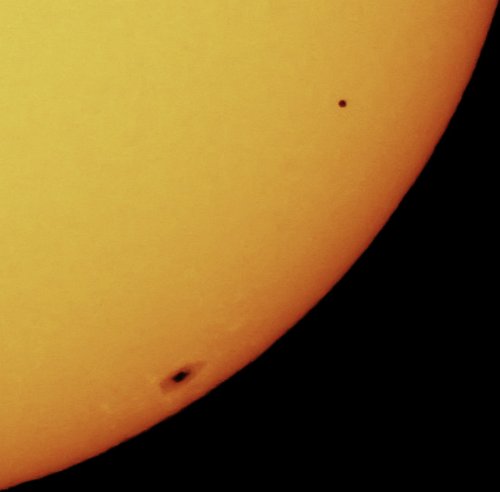 TOP CHOICEBest for larger sheets8"x8" Solar Filter Sheet for Telescopes, Binoculars and CamerasView on Amazon
- 3
 TOP CHOICEBest for 8-inch scopesCelestron EclipSmart 8" Solar Safe Eclipse Telescope FilterView on Amazon
- 4
 Best for universal fitCelestron EclipSmart Universal Solar Filter for TelescopesView on Amazon
- 5
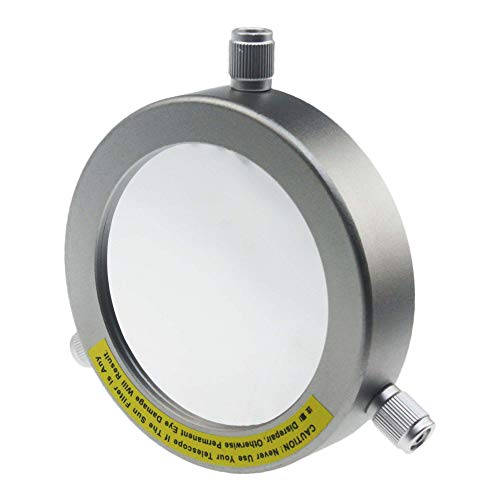 Best for budget mountingAstromania Deluxe Filter 100mm Adjustable Metal Cap for Telescope TubesView on Amazon
- 6
 Best for 127–130mm reflectorsCelestron EclipSmart Telescope Solar Filter for 127mm & 130mm ReflectoView on Amazon
- 7
 Best for eyepiece filteringAlstar Telescope Filter Set 1.25" Filter Kit for Telescope Eyepiece (7View on Amazon
Our Top Picks
| Product | Best for | Key feature |
|---|---|---|
| Thousand Oaks Optical 6″x6″ Solar Filter Sheet | Building a DIY front filter | Cut-to-size film sheet |
| 8″x8″ Solar Filter Sheet | Larger apertures and cutouts | Bigger sheet for cutting |
| Celestron EclipSmart 8″ Solar Safe Eclipse Telescope Filter | 8-inch Schmidt-Cassegrain scopes | ISO 12312-2 compliant |
| Celestron EclipSmart Universal Solar Filter | Tubes from 75–100mm | Universal fit design |
| Astromania Deluxe Filter 100mm Adjustable Metal Cap | Adjustable tube mounting | Adjustable metal cap |
| Celestron EclipSmart Telescope Solar Filter for 127mm & 130mm Reflectors | Select 127–130mm reflectors | Secure attachment |
| Alstar Telescope Filter Set 1.25″ | Eyepiece-level filtering | Seven-piece filter kit |
Thousand Oaks Optical 6″x6″ Solar Filter Sheet for Telescopes, Binoculars and Cameras
Thousand Oaks Optical 6"x6" Solar Filter Sheet for Telescopes, Binoculars and Cameras
Best for: Building a DIY front filter from a flat sheet.
This suits families who want to cut and mount their own filter for a telescope or binocular with a known aperture.
Pros
- Large enough to cut circles for several apertures
- Widely recommended film type in solar observing guides
Cons
- Requires careful cutting and mounting
8″x8″ Solar Filter Sheet for Telescopes, Binoculars and Cameras
8"x8" Solar Filter Sheet for Telescopes, Binoculars and Cameras
Best for: Larger apertures and cutouts.
A good match for parents who plan to cut filters for bigger telescopes or several instruments. You may also like How to Make Solar Filter for Telescope at Home: A Safe Step-by-Step Guide.
Pros
- Bigger sheet means fewer seams and more cutting options
- Works with telescopes, binoculars and cameras
Cons
- Needs precise measuring to avoid gaps around the edge
Celestron EclipSmart 8″ Solar Safe Eclipse Telescope Filter
Celestron EclipSmart 8" Solar Safe Eclipse Telescope Filter – ISO Compliant | ISO 12312-2 Compliant, 8" Schmidt-Cassegrain/EdgeHD Compatible, Observe Eclipses & Sunspots, Secure Fit, Natural Orange Ti
Best for: 8-inch Schmidt-Cassegrain and EdgeHD telescopes.
This is a ready-made option for families who want a filter that fits an 8-inch tube without cutting film.
Pros
- Manufacturer states ISO 12312-2 compliance
- Designed for eclipse and sunspot viewing
Cons
- Only fits specific 8-inch tube designs
Celestron EclipSmart Universal Solar Filter for Telescopes
Celestron EclipSmart Universal Solar Filter for Telescopes | ISO 12312-2 Compliant, Observe Eclipses & Sunspots, Fits 75-100mm Telescope Tubes, Safe White-Light Viewing, Easy Install
Best for: Telescope tubes between 75 and 100mm.
A flexible choice when the family’s scope size is not an exact standard match.
Pros
- Listed to fit a range of tube diameters
- Manufacturer specifies ISO 12312-2 compliance
Cons
- Check your tube diameter before buying
Astromania Deluxe Filter 100mm Adjustable Metal Cap for Telescope Tubes
Astromania Deluxe Filter 100mm Adjustable Metal Cap for Telescope Tubes with Outer Diameter from 70mm to 92mm Aperture 75mm
Best for: Adjustable mounting on tubes with varying diameters. 5 Best H Alpha Filters for Telescope Picks Compared (2026) goes further into this.
Useful for families experimenting with different small refractors or reflectors.
Pros
- Adjustable metal cap accommodates a range of outer diameters
- Simple slip-on design
Cons
- Confirm the listed diameter range matches your tube
Buying Guide
ISO 12312-2 Compliance
Look for filters labeled as meeting the ISO 12312-2 standard. This certification means the filter has been tested to block harmful levels of sunlight, including ultraviolet and infrared radiation. Filters without this standard should be avoided for direct solar viewing.
Telescope Size and Fit
Measure your telescope tube’s outer diameter before buying. Some filters attach to the front of the tube, while others are sheets that you cut and mount yourself. A filter that is too loose can slip off during observing, which is a serious safety risk.
Mounting Method
Decide whether you want a fixed, secure fit or a flexible sheet you can adapt to different instruments. Front-mounted filters with a secure attachment are generally easier for beginners and younger observers. Film-style sheets require more careful cutting, mounting, and inspection. For another angle, check out Celestron Telescope Solar Filter for 11 Inch SCT: 7 Best Picks Compared.
Intended Use
Consider what you plan to observe. Solar filters for full-disk sunspot viewing and eclipse watching are the main uses, while filter kits with colored lenses are designed for lunar and planetary observing and do not make the Sun safe to view. Match the product to your observing goals.
Inspection and Durability
Check the filter for pinholes, scratches, and creases before each use, and replace it if damage appears. Solar filter material can degrade over time, so buy from a reputable seller and store the filter in its protective packaging when not in use.
FAQ
Can I make a solar filter for my telescope at home?
Only certified solar filter material should be used to make a filter for solar viewing. Improvised materials such as sunglasses, exposed film, smoked glass, or CDs are not safe and can cause permanent eye damage. Purchasing an ISO 12312-2 compliant filter sheet or cap is the safest option.
How do I know if a solar filter is safe?
A safe solar filter will be clearly labeled with the ISO 12312-2 standard and sold by a reputable manufacturer. It should block nearly all visible and invisible sunlight, and it should attach securely to the front of your telescope. If a filter does not state compliance, do not use it.
Can children use a solar filter for telescope viewing?
Children can enjoy solar observing with a properly fitted, certified filter and close adult supervision. Adults should check the filter’s security and condition before every session. Teaching children never to look at the Sun without a filter is an important part of safe use.
Do eyepiece filter kits work for viewing the Sun?
Eyepiece filter kits designed for the Moon and planets are not safe for solar viewing. They are not built to block the intense sunlight that can harm your eyes. Use an ISO-compliant solar filter instead.
Is a solar filter needed for a solar eclipse?
Yes, a certified solar filter is needed at all times when observing the Sun, including during partial phases of an eclipse. The totality phase, when the Sun is fully blocked, is the only brief moment when the filter can be removed. Eye protection is required for every other part of the event.
How often should I replace my solar filter?
Replace your filter if you notice scratches, pinholes, creases, fading, or any damage to the film or frame. Even minor defects can allow harmful light through. Inspect it carefully before each observing session.
Conclusion
Families who want a simple, secure option for direct solar viewing should consider a front-mounted, ISO-compliant filter that matches their telescope size. Those who prefer a flexible, budget-friendly approach can choose a filter sheet and mount it themselves with careful attention to fit and inspection. Observers interested in lunar or planetary viewing should look at filter kits, but these should never be used to view the Sun.
Related reading
- Telescope Without Solar Filter: 5 Best Options Compared (2026)
- Telescope Solar Filter Film: How to Choose and Use It Safely (2026)
- Solar Filter 8 Inch Telescope: How to Choose and Use One Safely (2026)
About Owen Palmer
Owen Palmer is part of our editorial team and reviews and edits our astronomy for kids, teens & families guides, checking product details against manufacturer specifications and owner feedback.
About the author
Owen Palmer writes reviews and buying guides for Youth in Astronomy.