7 Best Refractor Telescopes with Tripod Picks for Beginners (2026)
Compare 7 refractor telescope with tripod options for beginners and families. See key specs, pros, cons and who each model suits before you buy.
 By Owen Palmer
Updated November 26, 2026
 By Owen Palmer
Updated November 2026
Choosing a refractor telescope with tripod is one of the simplest ways for a family to start stargazing. A refractor uses a lens at the front of a tube to gather light, so the view is typically sharp and contrasty, and a tripod keeps the setup steady enough for the Moon, bright planets and star clusters. This guide compares seven models sold on Amazon US. We judged each one on aperture (the lens width, which controls how much light it gathers), magnification range, tripod stability, ease of setup for young users, included accessories and owner feedback patterns. Nothing here comes from personal testing, so check each listing before you buy.
Our top picks at a glance
- 1TOP CHOICEBest overallTelescope for Kids & Beginners, 70mm Aperture (15X-150X) AZ Mount TeleView on Amazon
- 2
 TOP CHOICEBest for families with phonesTelescope for Adults & Kids, 70MM Aperture FMC Optics Telescopes for AView on Amazon
- 3
 TOP CHOICEBest for high power with a moon filterHUGERSTAR Telescope, Telescope for Adults High Powered, 90mm ApertureView on Amazon
- 4
 Best for planet viewingTelescope, 90MM Telescope for Adults High Powered, 180X MagnificationView on Amazon
- 5
 Best budget pickVivitar TEL50600 60X/120X Telescope Refractor with Tripod (Black)View on Amazon
- 6
 Best for travelCelestron Travel Scope 70mm Beginner Portable Telescope with BackpackView on Amazon
- 7
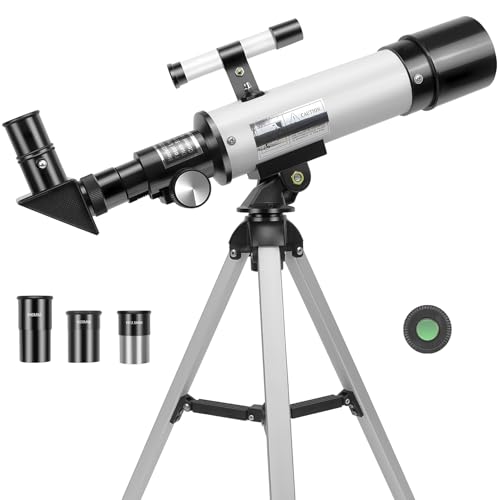 Best for young kidsTelescope, 50mm Aperture 360mm Astronomical Refractor Telescope with TView on Amazon
Our Top Picks
| Product | Best for | Key feature |
|---|---|---|
| Telescope for Kids & Beginners, 70mm Aperture | Beginners who want an all-round first scope | 15X–150X magnification range with AZ mount |
| Telescope for Adults & Kids, 70MM Aperture FMC Optics | Families who want a phone adapter | Phone adapter and tripod included |
| HUGERSTAR Telescope, 90mm Aperture 800mm | Owners who want more light and a moon filter | 90mm aperture with moon filter and carrying bag |
| Telescope, 90MM High Powered, 180X | Planet and Moon observing | 180X magnification with 3X Barlow lens |
| Vivitar TEL50600 60X/120X Refractor | Tight budgets and short sessions | Simple refractor with tripod |
| Celestron Travel Scope 70mm | Trips, camping and backyard sessions | Backpack included, no-tool setup |
| Telescope, 50mm Aperture 360mm Refractor | Young children starting out | Lightweight, compact tube length |
Telescope for Kids & Beginners, 70mm Aperture (15X-150X) AZ Mount Telescopes for Astronomy, Portable Refractor Telescope with Tripod, Phone Adapter
Telescope for Kids & Beginners, 70mm Aperture (15X-150X) AZ Mount Telescopes for Astronomy, Portable Refractor Telescope with Tripod, Phone Adapter
Best for: Beginners who want an all-round first scope
This model suits a family that wants one scope for the Moon, planets and bright double stars, with enough magnification range to grow into it.
Key specs
- 70mm aperture refractor
- 15X–150X magnification range
- Altazimuth (AZ) mount with tripod
- Phone adapter included
Pros
- Wide magnification range for different targets
- AZ mount is intuitive for children
- Phone adapter allows simple photos of the Moon
Cons
- Magnification numbers on boxes are often higher than the image is useful at
- Tripod can feel light in windy conditions
Bottom line: A strong first pick for a family that wants one scope to grow with.
View on AmazonTelescope for Adults & Kids, 70MM Aperture FMC Optics Telescopes for Astronomy Beginners, 300MM Refractor Telescope (15X-150X) with Phone Adapter and Tripod, Travel Gifts for Moon, Jupiter and Star
Telescope for Adults & Kids, 70MM Aperture FMC Optics Telescopes for Astronomy Beginners, 300MM Refractor Telescope (15X-150X) with Phone Adapter and Tripod, Travel Gifts for Moon, Jupiter and Star
Best for: Families who want a phone adapter
Parents who want to share photos of the Moon or Jupiter with a phone will find the bundled adapter useful.
Key specs
- 70mm aperture refractor
- 300mm focal length
- 15X–150X magnification range
- Phone adapter and tripod included
Pros
- Phone adapter is part of the kit
- Focal length suits a compact tube
- Good for Moon and Jupiter viewing
Cons
- Phone photos are limited by phone camera quality
- Lower-end tripods may wobble at high magnification
Bottom line: Best for families who want a simple bundle with photo capability.
View on AmazonHUGERSTAR Telescope, Telescope for Adults High Powered, 90mm Aperture 800mm Professional Portable Refractor Telescopes for Astronomy Beginners with Tripod, Moon Filter, Phone Adapter & Carrying Bag
HUGERSTAR Telescope, Telescope for Adults High Powered, 90mm Aperture 800mm Professional Portable Refractor Telescopes for Astronomy Beginners with Tripod, Moon Filter, Phone Adapter & Carrying Bag
Best for: Owners who want more light and a moon filter
A 90mm lens gathers more light than a 70mm, which helps with fainter objects and brighter views of the Moon.
Key specs
- 90mm aperture refractor
- 800mm focal length
- Moon filter included
- Phone adapter and carrying bag included
Pros
- Larger aperture than 70mm options
- Moon filter reduces glare
- Carrying bag helps with storage
Cons
- Heavier to carry than smaller refractors
- Higher magnification numbers can be hard to use without steady hands
Bottom line: A good step up for families who want brighter lunar and planetary views.
View on AmazonTelescope, 90MM Telescope for Adults High Powered, 180X Magnification | Portable Professional Astronomy Refractor Telescopes for Beginners, with Adjustable Tripod & Phone Adapter, 3X Barlow Lens
Telescope, 90MM Telescope for Adults High Powered, 180X Magnification | Portable Professional Astronomy Refractor Telescopes for Beginners, with Adjustable Tripod & Phone Adapter, 3X Barlow Lens
Best for: Planet and Moon observing
Adults and older teens who want to push magnification for planets will like the included Barlow lens.
Key specs
- 90mm aperture refractor
- 180X maximum magnification
- Adjustable tripod
- 3X Barlow lens included
Pros
- Barlow lens adds magnification options
- Larger aperture for planetary detail
- Adjustable tripod height
Cons
- 180X is mostly useful on very steady nights
- Setup takes more patience than simpler kits
Bottom line: Best for owners who care most about planets and are comfortable with fine adjustments.
View on AmazonVivitar TEL50600 60X/120X Telescope Refractor with Tripod (Black)
Vivitar TEL50600 60X/120X Telescope Refractor with Tripod (Black) | Tripod
Best for: Tight budgets and short sessions
This is a simple entry-level refractor for families who want to try astronomy without a large commitment.
Key specs
- 60X/120X magnification range
- Refractor optical design
- Tripod included
Pros
- Simple, understandable setup
- Includes tripod in the box
- Suitable for basic Moon viewing
Cons
- Smaller aperture limits fainter objects
- Tripod stability is modest at higher magnification
Bottom line: A reasonable budget pick for families testing whether they enjoy stargazing.
View on AmazonCelestron Travel Scope 70mm Beginner Portable Telescope with Backpack
Celestron Travel Scope 70mm Beginner Portable Telescope with Backpack | 70mm Refractor Telescope Kit, Bright Lunar & Planetary Views, Day & Night Use, Backpack Included, Quick No-Tool Setup
Best for: Trips, camping and backyard sessions
Families who travel to dark-sky areas or camp will appreciate a scope that packs into a backpack.
Key specs
- 70mm aperture refractor
- Backpack included
- No-tool quick setup
- Suitable for day and night use
Pros
- Backpack makes transport easy
- Quick setup for short sessions
- Bright lunar and planetary views
Cons
- Compact tripod is less stable in wind
- Limited accessories compared with bundles
Bottom line: The right choice for families who want portability above all.
View on AmazonTelescope, 50mm Aperture 360mm Astronomical Refractor Telescope with Tripod Portable (White)
Telescope, 50mm Aperture 360mm Astronomical Refractor Telescope with Tripod Portable (White)
Best for: Young children starting out
A small, light refractor is easier for kids to carry and aim, though views will be more modest than with larger apertures.
Key specs
- 50mm aperture refractor
- 360mm focal length
- Tripod included
Pros
- Lightweight and easy for kids to handle
- Compact tube length
- Low-cost way to start
Cons
- Smaller aperture gathers less light
- Limited for faint deep-sky objects
Bottom line: A gentle introduction for young children, with realistic expectations about the view.
View on AmazonBuying Guide
Aperture and light gathering
Aperture is the diameter of the front lens, and it is the most important number on a refractor. A 70mm lens collects noticeably more light than a 50mm lens, and a 90mm lens collects more again. More light means brighter views and better detail on the Moon and planets. Look for the aperture in millimeters on the listing.
Good picks for this: Telescope for Kids & Beginners, 70mm Aperture; HUGERSTAR Telescope, 90mm Aperture 800mm
Magnification ranges
Magnification equals the eyepiece focal length divided into the telescope focal length. Manufacturers often advertise very high numbers like 150X or 180X, but these are only useful when the air is steady and the target is bright. A range around 15X to 150X covers most family uses. Be skeptical of very high numbers on small scopes.
Good picks for this: Telescope for Adults & Kids, 70MM Aperture FMC Optics; Telescope, 90MM High Powered, 180X
Tripod stability and height
A wobbly tripod is the most common complaint in owner feedback for beginner scopes. Look for a sturdy tripod with adjustable height, and check whether the legs extend and lock firmly. A stable mount matters more than a long list of accessories, especially at higher magnification.
Good picks for this: Telescope, 90MM High Powered, 180X; Vivitar TEL50600 60X/120X Refractor
Portability and carrying
If you plan to observe away from home, weight and packed size matter. Smaller refractors with backpacks are easier to carry on a hike or drive. Larger apertures are heavier, so think about how far you will carry the setup and how often you will move it.
Good picks for this: Celestron Travel Scope 70mm Beginner Portable Telescope; Telescope, 50mm Aperture 360mm Refractor
Included accessories
Phone adapters, Barlow lenses, moon filters and carrying bags can add real value. A moon filter helps reduce glare on bright lunar views, and a Barlow lens doubles or triples the magnification of existing eyepieces. Check what is actually in the box before comparing prices across listings.
Good picks for this: Telescope for Adults & Kids, 70MM Aperture FMC Optics; HUGERSTAR Telescope, 90mm Aperture 800mm
Ease of setup for kids
Children do best with simple alt-azimuth mounts and clearly labeled eyepieces. A quick setup with few parts reduces frustration and keeps young observers interested. Consider who will set up the telescope most often and whether they will need help.
Good picks for this: Telescope for Kids & Beginners, 70mm Aperture; Celestron Travel Scope 70mm
Care and durability
Keep lens caps on when the scope is not in use, store the tube in a dry place and avoid pointing the telescope at the Sun without a proper solar filter, as direct sunlight can permanently damage eyes. Tighten tripod bolts before each session. If you have questions about eye safety, consult an eye care professional or a qualified astronomy educator.
Good picks for this: Vivitar TEL50600 60X/120X Refractor; Celestron Travel Scope 70mm
FAQ
What is a refractor telescope with tripod best used for?
It works well for viewing the Moon, bright planets like Jupiter and Saturn, and some bright double stars. It is less suited to very faint galaxies and nebulae, which need larger apertures.
Is a 70mm refractor enough for beginners?
For most families, yes. A 70mm refractor gives clear views of the Moon and planets and is a practical starting size. Larger apertures brighten the view but add weight and cost.
Why do magnification numbers matter less than aperture?
Aperture controls how much light enters the telescope. Higher magnification only enlarges what is already there, so a small lens at high power can look dim and blurry. More light usually gives a better picture.
Do I need a phone adapter?
No, but it is helpful for sharing views and taking simple photos of the Moon. Results depend on your phone camera and how steady the setup is.
Can children use these telescopes on their own?
Many can with supervision. Choose a lightweight model with a simple mount, and teach children to find targets using low magnification first.
How do I keep the tripod steady?
Set the legs on firm ground, extend them evenly and tighten all locks before observing. Avoid touching the tube while looking through the eyepiece, since small movements show up strongly at high magnification.
Conclusion
For a family that wants a versatile first scope, the 70mm Telescope for Kids & Beginners is a sensible starting point. Families who want a phone adapter should look at the FMC Optics bundle. Owners who care about brighter lunar and planetary views may prefer the 90mm HUGERSTAR model, while those focused on planets might consider the 90mm 180X kit. Budget-minded buyers can start with the Vivitar, travelers should consider the Celestron Travel Scope, and young children may do best with the 50mm model. Match the aperture, tripod stability and included accessories to how your family plans to observe.
Sources
- Current sky events, Moon and planet visibility, and basic observing resources (nasa.gov)
- Amateur astronomy education, observing guides and club resources for families
- Product safety guidance for children's toys and optical products (cpsc.gov)
Before you buy: helpful guides
- Itek Refractor Telescope with Tripod: A Beginner's Setup and Buying Guide
- Polaroid 75x/150x Refractor Telescope with Full Size Adjustable Tripod: A Practical Guide (2026)
- Telescope Reflector or Refractor: How to Choose the Right One for Your Family
- How Do You Explore Scientific Refractor Telescope Skies? A Beginner's Guide
- 70mm Refractor Telescope for Beginners: What to Know Before You Buy
About Owen Palmer
Owen Palmer is part of our editorial team and reviews and edits our astronomy for kids, teens & families guides, checking product details against manufacturer specifications and owner feedback.
About the author
Owen Palmer writes reviews and buying guides for Youth in Astronomy.