7 Best 120mm Refractor Telescope Picks for Families (2026)
Looking for the best 120mm refractor telescope for your family? We compare seven picks by fit, specs and owner feedback patterns to help you choose.
 By Owen Palmer
Updated November 25, 2026
 By Owen Palmer
Updated November 2026
Shopping for the best 120mm refractor telescope can feel like a lot of jargon at once: focal ratio, mount type, coatings, focuser travel. This guide sorts it out for families who want a telescope that works for kids and adults alike. The picks below are judged on research-based criteria: specifications, brand reputation and the patterns owners tend to report after months of use. We did not test these instruments ourselves. Read on for a quick overview, a comparison table, and a buying guide that explains what matters and what can be ignored.
Our top picks at a glance
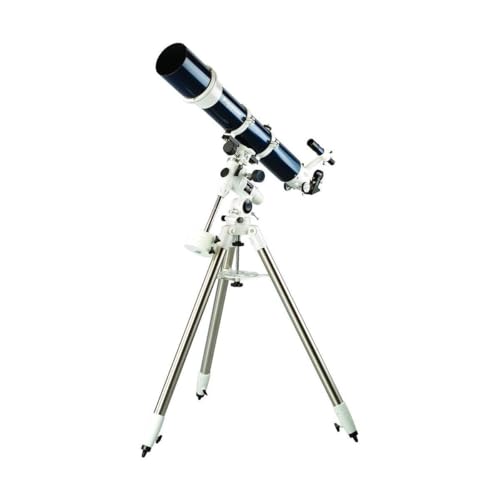
- 1TOP CHOICEBest overallCelestron Omni XLT 120mm Refractor Premium CG-4 Mount TelescopeView on Amazon
- 2
 TOP CHOICEBest for planets and the MoonSVBONY SV530 ED Refractor Telescope Built-in Field Flattener, 80mm ApertureView on Amazon
- 3
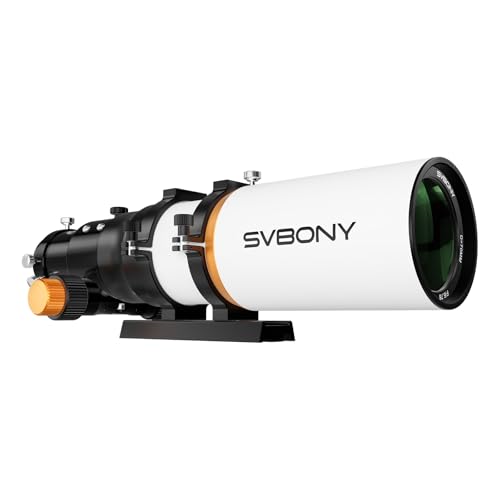 TOP CHOICEBest for wide-field viewsSVBONY SV503 Refractor Telescope, with Field Flattener, 70mm ED RefractorView on Amazon
- 4
 Best for absolute beginnersCelestron StarSense Explorer DX 102AZ App-Enabled Refractor TelescopeView on Amazon
- 5
 Best budget pickGskyer Telescope 600x90mm AZ Astronomical Refractor Telescope for AdultsView on Amazon
- 6
 Best for daytime and nature viewingHemrsey 90mm Aperture 800mm Refractor Telescopes for Adults High PoweredView on Amazon
- 7
 Best for deep-sky photographySVBONY SV48P Telescope, 90mm Aperture F5.5 Refractor OTAView on Amazon
Our Top Picks
Quick Comparison
| Product | Best for | Key feature |
|---|---|---|
| Celestron Omni XLT 120mm Refractor Premium CG-4 Mount Telescope | Serious family observing | 120mm refractor with a German equatorial mount |
| SVBONY SV530 ED Refractor Telescope, 80mm Aperture | Planets and the Moon | Built-in field flattener and dual-speed focuser |
| SVBONY SV503 Refractor Telescope, with Field Flattener, 70mm ED Refractor | Wide-field views | ED glass optics with a field flattener |
| Celestron StarSense Explorer DX 102AZ App-Enabled Refractor Telescope | Absolute beginners | Smartphone-guided sky navigation |
| Gskyer Telescope 600x90mm AZ Astronomical Refractor Telescope for Adults | Budget-minded families | Simple altazimuth mount with high-power eyepieces |
| Hemrsey 90mm Aperture 800mm Refractor Telescopes for Adults High Powered | Daytime and nature viewing | Lightweight aluminum tripod and easy setup |
| SVBONY SV48P Telescope, 90mm Aperture F5.5 Refractor OTA | Deep-sky astrophotography | Fast f/5.5 focal ratio |
Celestron Omni XLT 120mm Refractor Premium CG-4 Mount Telescope
Celestron Omni XLT 120mm Refractor Premium CG-4 Mount Telescope | Sharp Refractor Optics with StarBirght XLT Coatings, Precision Manual German Equatorial EQ Mount with Slow-Motion Controls
Best for: Serious family observing with a sturdy, precise mount
This is the classic choice for families who want the full 120mm aperture experience and are willing to spend time learning a German equatorial mount. It suits a parent who will set it up for regular sessions and a teenager who wants to track planets or double stars.
Key specs
- 120mm refractor optics with StarBright XLT coatings
- Precision manual German equatorial (EQ) mount with slow-motion controls
Pros
- Large aperture gathers noticeably more light than smaller refractors
- Slow-motion controls make fine tracking easier once aligned
- Coatings are a well-known strength of the Celestron optical line
Cons
- Equatorial mounts take practice to polar align
- Heavier to carry than tabletop or lightweight options
Bottom line: Best for families who want the most capable 120mm setup and don’t mind a short learning curve.
View on AmazonSVBONY SV530 ED Refractor Telescope Built-in Field Flattener, 80mm Aperture
SVBONY SV530 ED Refractor Telescope Built-in Field Flattener, 80mm Aperture | f/6 Focal Ratio 480mm Focal Length, Dual‑speed Focuser, Wide-Field Imaging, Visual & Astrophotography for Astronomy Beginn
Best for: Planets and the Moon, plus some wide-field imaging
This model is aimed at families who like sharp, high-contrast views of the Moon and planets and may want to try basic astrophotography later. Its 480mm focal length at f/6 is a practical balance of field of view and magnification.
Key specs
- 80mm aperture with ED glass optics
- f/6 focal ratio, 480mm focal length
- Built-in field flattener and dual-speed focuser
Pros
- Built-in field flattener supports wide-field and imaging work
- Dual-speed focuser makes fine focusing easier
- Good portability for a telescope of this class
Cons
- 80mm is smaller than the 120mm class, so faint objects are dimmer
- Accessories and mount quality can vary by bundle
Bottom line: A good fit for families who prioritize sharp planetary views and simple imaging experiments.
View on AmazonSVBONY SV503 Refractor Telescope, with Field Flattener, 70mm ED Refractor
SVBONY SV503 Refractor Telescope, with Field Flattener, 70mm ED Refractor | F6.78 Focal Ratio, Extra Low Dispersion Achromatic OTA, Telescope for Adults, for Astrophotography Visual Astronomy
Best for: Wide-field views of star clusters and the Milky Way
This compact refractor is suited to families who want to start with broad, low-power views of large sky features. The extra-low-dispersion (ED) glass helps reduce color fringing on bright objects.
Key specs
- 70mm aperture, ED achromatic objective
- F6.78 focal ratio
- Includes a field flattener
Pros
- Low-power wide-field views make it easy to find targets
- ED glass helps keep color fringing down on bright targets
- Lightweight and easy to move outdoors
Cons
- 70mm aperture limits detail on faint deep-sky objects
- Smaller aperture than the 120mm class
Bottom line: A portable pick for families who mostly want big, pleasing views of the night sky.
View on AmazonCelestron StarSense Explorer DX 102AZ App-Enabled Refractor Telescope
Celestron StarSense Explorer DX 102AZ App-Enabled Refractor Telescope | Smartphone-Guided Navigation, Premium Refractor Telescope with Manual Mount, Moon & Planet Viewing, Great for Beginners
Best for: Absolute beginners who want help finding objects
This is a strong option for families who have never used a telescope. A smartphone app guides the aiming process, which removes much of the frustration that stops new observers from going back outside.
Key specs
- Smartphone-guided sky navigation
- Manual altazimuth mount
- Designed for Moon, planet and bright deep-sky viewing
Pros
- The app makes locating objects simple for first-timers
- Manual mount is easy to set up and move
- Good for kids who want quick results
Cons
- App guidance depends on phone compatibility and battery life
- Manual mount limits tracking for long astrophotography exposures
Bottom line: The easiest path into observing for families who value simplicity above all.
View on AmazonGskyer Telescope 600x90mm AZ Astronomical Refractor Telescope for Adults
Gskyer Telescope 600x90mm AZ Astronomical Refractor Telescope for Adults | High-power 90mm AZ Telescope For Adults Astronomy, Telescope for Beginners, German Technology Scope
Best for: Budget-minded families who want a simple starter scope
This altazimuth refractor is a practical entry point for families who want to try astronomy without a large commitment. Its high-power marketing claims should be taken with care, since useful magnification is always limited by aperture and sky conditions.
Key specs
- 90mm aperture refractor
- Altazimuth mount
- Marketed with a 600x maximum magnification figure
Pros
- Simple up-and-down and side-to-side mount is intuitive
- Budget-friendly option for a first telescope
- Good for casual Moon and planet glances
Cons
- The advertised 600x magnification is rarely useful in practice
- Build quality and mount stiffness can vary according to owner reports
Bottom line: Pick this if you want a low-risk way to see whether your family enjoys astronomy.
View on AmazonHemrsey 90mm Aperture 800mm Refractor Telescopes for Adults High Powered
Hemrsey 90mm Aperture 800mm Refractor Telescopes for Adults High Powered | FMC Optics, Moon Viewing, Stargazing, Bird Watching, Daytime Scenery, 240X Magnification, Aluminum Tripod, Easy Setup
Best for: Daytime nature viewing and casual Moon watching
The lightweight aluminum tripod and simple setup suit families who want a telescope for birds, scenery and the Moon. The 800mm focal length gives a fairly bright, easy-to-use image at moderate magnification.
Key specs
- 90mm aperture refractor
- 800mm focal length
- Aluminum tripod
Pros
- Works for daytime landscapes and wildlife as well as the night sky
- Lightweight tripod is easy for kids to carry
- Quick setup with few parts
Cons
- Advertised magnification figures can be overstated
- Lightweight tripods can wobble at high power
Bottom line: A good multipurpose scope for families who want daytime use alongside night viewing.
View on AmazonSVBONY SV48P Telescope, 90mm Aperture F5.5 Refractor OTA
SVBONY SV48P Telescope, 90mm Aperture F5.5 Refractor OTA | Telescope for Adults & Beginner Astronomers, Telescopes for Deep Sky Astrophotography and Visual Astronomy
Best for: Deep-sky photography and wide-field observing
The fast f/5.5 ratio is the main draw here. It is a shorter tube that gathers light efficiently and suits families who want to try photographing nebulae and galaxies with a camera adapter.
Key specs
- 90mm aperture refractor
- F5.5 focal ratio
- Optical tube assembly (OTA) sold without a mount
Pros
- Fast focal ratio suits short exposures in photography
- Compact tube for its aperture class
- Good match for a separate equatorial or tracking mount
Cons
- Requires a separate mount, which adds cost and setup
- Fast optics are less forgiving of focus and collimation errors
Bottom line: Best for families already committed to astrophotography who have or plan to buy a mount.
View on AmazonBuying Guide
Aperture and Why 120mm Matters
Aperture is the diameter of the main lens, and it sets how much light the telescope collects. A 120mm objective gathers far more light than a 70mm one, which means fainter galaxies and nebulae become visible. For families, that difference is most noticeable on deep-sky targets from a dark site.
Good picks for this: Celestron Omni XLT 120mm Refractor Premium CG-4 Mount Telescope, SVBONY SV530 ED Refractor Telescope Built-in Field Flattener, 80mm Aperture
Focal Ratio and Field of View
Focal ratio (the f-number) describes how wide a view you get at low power. Lower numbers like f/5.5 give a wider, brighter field, which helps when hunting for star clusters. Higher numbers like f/6.78 give a bit more magnification per eyepiece and tend to be more forgiving with focus.
Good picks for this: SVBONY SV503 Refractor Telescope, with Field Flattener, 70mm ED Refractor, SVBONY SV48P Telescope, 90mm Aperture F5.5 Refractor OTA
Mount Type: Altazimuth, Manual Equatorial and Computerized
Altazimuth mounts move up-down and side-to-side and are the easiest for beginners. Equatorial mounts tilt to follow the sky’s rotation, which is better for long observing sessions and photography but harder to learn. Some models add smartphone guidance to smooth out the learning curve.
Good picks for this: Celestron StarSense Explorer DX 102AZ App-Enabled Refractor Telescope, Gskyer Telescope 600x90mm AZ Astronomical Refractor Telescope for Adults
Optical Quality: Achromatic Versus ED Glass
Refractors can show color fringing around bright objects, called chromatic aberration. Achromatic designs reduce it, while extra-low-dispersion (ED) glass reduces it further. Owners of ED models often describe cleaner edges on the Moon and planets, though the difference depends on your eyes and the conditions.
Good picks for this: SVBONY SV530 ED Refractor Telescope Built-in Field Flattener, 80mm Aperture, SVBONY SV503 Refractor Telescope, with Field Flattener, 70mm ED Refractor
Portability and Weight
A 120mm refractor with a heavy equatorial mount is harder to carry than a small tabletop scope. Think about how far you will walk to your observing spot and who will carry it. Lightweight aluminum tripods are easier for kids, but they can shake at high power, so pick a stable spot.
Good picks for this: Hemrsey 90mm Aperture 800mm Refractor Telescopes for Adults High Powered, SVBONY SV503 Refractor Telescope, with Field Flattener, 70mm ED Refractor
Focuser Quality and Eyepiece Compatibility
A smooth focuser makes the difference between a sharp image and frustration. Dual-speed focusers let you make coarse moves quickly and fine adjustments slowly. Check the focuser size, usually 1.25-inch, so your eyepieces fit.
Good picks for this: SVBONY SV530 ED Refractor Telescope Built-in Field Flattener, 80mm Aperture, Celestron Omni XLT 120mm Refractor Premium CG-4 Mount Telescope
Care and Durability
Keep lens caps on when the scope isn’t in use, store it in a dry place, and clean the optics only with lens-safe tissue and approved solution. Avoid pointing any telescope at the Sun without a proper solar filter, because direct sunlight through an optical instrument can cause permanent eye damage. Children should always observe the Sun only with a certified solar filter and adult supervision.
Good picks for this: Celestron StarSense Explorer DX 102AZ App-Enabled Refractor Telescope, Hemrsey 90mm Aperture 800mm Refractor Telescopes for Adults High Powered
FAQ
Is a 120mm refractor good for kids?
A 120mm refractor can be a rewarding choice for older kids and teens who are willing to learn the setup. Younger children often do better with a simpler, lighter scope and an adult helper for alignment.
Do I need an equatorial mount for a 120mm refractor?
Not necessarily. An equatorial mount helps with tracking and photography, but an altazimuth mount is easier for casual viewing. Choose based on whether you plan to photograph the sky.
What magnification should I expect from a 120mm refractor?
Magnification depends on the eyepiece, not just the telescope. A common rule is that useful magnification tops out around twice the aperture in millimeters, which is about 240x for a 120mm scope under good conditions. Higher numbers in marketing copy are rarely practical.
Can a 120mm refractor be used for astrophotography?
Yes, with a camera adapter and a stable mount that can track the sky. Beginners often start with the Moon and bright planets before attempting deep-sky images.
What is the difference between a refractor and a reflector for families?
Refractors use lenses and typically need less maintenance because their tubes are sealed. Reflectors use mirrors and often gather more light per dollar of aperture, though they need occasional alignment of the mirror. Both can work well for families.
Where should I observe from?
Dark skies make a big difference for faint objects. Light pollution from streetlights and nearby towns limits what you can see, so drive to a darker site when you can. Check local astronomy club events, which often host public observing nights.
Conclusion
The best 120mm refractor telescope for most families depends on how much setup your household is willing to handle. The Celestron Omni XLT 120mm is the most direct match for the aperture class and suits families who want a capable, traditional setup. For beginners who want guidance, the Celestron StarSense Explorer DX 102AZ is the easiest starting point. Families focused on planets and the Moon may prefer the SVBONY SV530, while those who mostly want wide, pleasing views should look at the SVBONY SV503. Budget-minded buyers can consider the Gskyer model, and anyone interested in photography may find the SVBONY SV48P a good match when paired with a suitable mount. Match the telescope to the activity your family will do most, and you will get more use from it.
Sources
- Background on telescopes, the night sky and observing basics for beginners (nasa.gov)
- Guidance on dark skies, night sky viewing and light pollution in national parks (nps.gov)
- Resources from a professional astronomy society on public observing and education
Before you buy: helpful guides
Related reading
- 3 Best Vivitar Refractor Telescopes with Tripod Picks for Families (2026)
- Which Is Best Reflector or Refractor Telescope? A Family Guide (2026)
About Owen Palmer
Owen Palmer is part of our editorial team and reviews and edits our astronomy for kids, teens & families guides, checking product details against manufacturer specifications and owner feedback.
About the author
Owen Palmer writes reviews and buying guides for Youth in Astronomy.