Cheap Refractor Telescope for Astrophotography: 7 Best Picks (2026)
Looking for a cheap refractor telescope for astrophotography? Compare seven options by optics, mounts, and phone or camera support to find your fit.
 By Owen Palmer
Updated November 25, 2026
 By Owen Palmer
Updated November 2026
Finding a cheap refractor telescope for astrophotography can feel tricky, because the gear that looks like a bargain is often missing the parts that actually make photos work: a stable mount, a focuser that holds steady, and optics sharp enough to show detail. This list focuses on refractors and smart-refractor setups that give families and beginners a realistic path into astrophotography. Our selection criteria were specifications, brand reputation, and patterns in owner feedback, with attention to aperture, focal ratio, mount stability, camera or phone compatibility, and how easy each system is to set up in a backyard.
Our top picks at a glance
- 1TOP CHOICEBest overallSVBONY SV503 Telescope for Adults High Powered, 102mm Large Diameter F7 ED Achromatic OTAView on Amazon
- 2
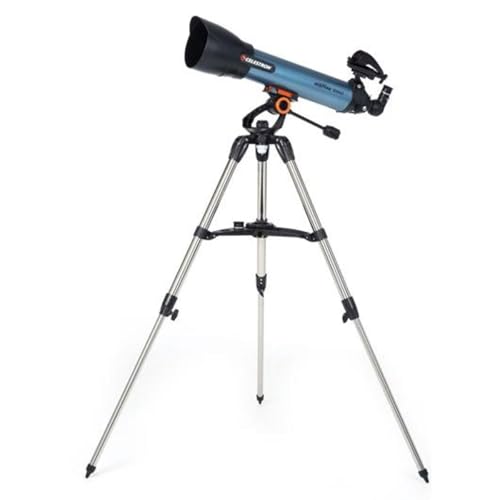 TOP CHOICEBest for families with a phoneCelestron Inspire 100AZ Beginner Refractor Telescope with Phone AdapterView on Amazon
- 3
 TOP CHOICEBest for small kitchens and tight storageSmart Digital Telescope, Auto Focus 4K Astrophotography Refractor TeleView on Amazon
- 4
 Best for hands-off imagingDigital Telescope,Professional Auto-Focus Digital Refractor Smart TeleView on Amazon
- 5
 Best for deep-sky focusSVBONY SV48P Telescope, 90mm Aperture F5.5 Refractor OTA for Deep Sky AstrophotographyView on Amazon
- 6
 Best for a wide-field camera setupSmart Telescope,Refractor Auto-focus Portable Digital Electronic TelesView on Amazon
- 7
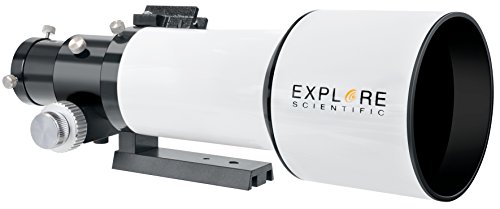 Best budget pick for serious opticsExplore Scientific ED80 Essential 80mm Apochromatic Triplet RefractorView on Amazon
Our Top Picks
Quick Comparison
| Product | Best for | Key feature |
|---|---|---|
| SVBONY SV503 102mm F7 ED Refractor | Overall astrophotography | 102mm ED objective with dual-speed focuser |
| Digital Telescope with 4K Camera and App (B0HKM9HHZT) | Hands-off imaging | Auto-focus with remote app control |
| Smart Telescope Auto-Focus Portable Digital Refractor (B0H9RKZ2BR) | Wide-field digital imaging | Built-in 4K camera and dual screens |
| Celestron Inspire 100AZ Beginner Refractor | Families with a phone | Phone adapter for moon and planet shots |
| SVBONY SV48P 90mm F5.5 Refractor OTA | Deep-sky targets | Fast F5.5 focal ratio |
| Smart Digital Telescope, Auto Focus 4K (B0H9R9S5SV) | Small spaces | Compact dual-screen portable design |
| Explore Scientific ED80 Essential Triplet | Optical quality on a budget | Air-spaced ED triplet optics |
SVBONY SV503 Telescope for Adults High Powered, 102mm Large Diameter F7 ED Achromatic OTA
SVBONY SV503 Telescope for Adults High Powered, 102mm Large Diameter F7 ED | Extra Low Dispersion Achromatic OTA, Dual-Speed Focuser, Refractor Telescope for Planets Deep Sky Astrophotography Visual
Best for: Overall astrophotography with a traditional refractor
This is a good fit for a family member who wants a true optical tube with room to grow. The larger aperture gathers more light for planets and deep-sky objects, so it suits people who plan to add a sturdy mount and a camera over time.
Key specs
- 102mm aperture
- F7 focal ratio
- Extra-low dispersion (ED) glass
- Dual-speed focuser
Pros
- Large aperture for its class
- Dual-speed focuser helps fine focusing
- Works for both visual and imaging use
Cons
- Needs a good mount to get the most out of it
- Heavier than short-tube options
Bottom line: Best for a family that wants a long-term refractor and is willing to add a steady mount.
View on AmazonDigital Telescope, Professional Auto-Focus Digital Refractor Smart Telescope with 4K Astrophotography Camera
Digital Telescope,Professional Auto-Focus Digital Refractor Smart Telescope | with 4K Astrophotography Camera,App,Remote Control,Dual Screens Spotter For Beginners & Adults
Best for: Hands-off imaging
Smart digital telescopes handle focusing and framing through an app, which helps beginners who want images on a screen without a long learning curve. Kids often enjoy the instant results.
Key specs
- Built-in 4K astrophotography camera
- Auto-focus
- App and remote control
- Dual screens
Pros
- Minimal manual focusing
- Images viewable on a phone or screen
- Easy for younger users
Cons
- Less hands-on optical experience than a traditional refractor
- Depends on app and battery performance
Bottom line: A strong pick for families who want photos fast and don’t mind a digital workflow.
View on AmazonSmart Telescope, Refractor Auto-focus Portable Digital Electronic Telescopes with 4K Astrophotography Camera
Smart Telescope,Refractor Auto-focus Portable Digital Electronic Telescopes | with 4K Astrophotography Camera,App,Remote Control,Dual Screens Spotter for Adults and Beginners Astronomy
Best for: Wide-field digital imaging
This is a portable option for adults and older teens who want to share images with the family on a larger screen. The dual-screen design makes it easy for two people to view the same target.
Key specs
- Built-in 4K camera
- Auto-focus
- Dual screens
- Portable design
Pros
- Easy to carry outdoors
- Shared viewing for two people
- Auto-focus simplifies setup
Cons
- Digital output means less direct eyepiece viewing
- Image quality depends on the sky and power source
Bottom line: Good for families who want a portable digital scope for shared viewing.
View on AmazonCelestron Inspire 100AZ Beginner Refractor Telescope with Phone Adapter
Celestron Inspire 100AZ Beginner Refractor Telescope with Phone Adapter | Great First Telescope for Families, Grab-and-Go Short-Tube Refractor, Capture the Moon & Planets with Your Phone, Easy Setup
Best for: Families with a phone
The Inspire 100AZ is a grab-and-go short-tube refractor. The phone adapter lets you capture the moon and bright planets without buying a dedicated camera, which makes it a natural first step for kids and parents.
Key specs
- Short-tube refractor design
- Phone adapter included
- Altazimuth mount
Pros
- Quick, simple setup
- Phone adapter for easy moon shots
- Good starter telescope for families
Cons
- Limited for deep-sky astrophotography
- Phone photos are best with steady hands or a tripod
Bottom line: A practical choice for families who want to start with moon and planet photos using a phone.
View on AmazonSVBONY SV48P Telescope, 90mm Aperture F5.5 Refractor OTA for Deep Sky Astrophotography
SVBONY SV48P Telescope, 90mm Aperture F5.5 Refractor OTA | Telescope for Adults & Beginner Astronomers, Telescopes for Deep Sky Astrophotography and Visual Astronomy
Best for: Deep-sky targets
The fast F5.5 focal ratio makes this optical tube well suited to wide nebulae and star clusters. It is an optical tube assembly, so you will need a mount and, for imaging, a camera.
Key specs
- 90mm aperture
- F5.5 focal ratio
- Optical tube assembly (OTA) only
Pros
- Fast focal ratio suits wide-field imaging
- Lightweight for its aperture
- Good match for a basic equatorial mount
Cons
- Mount and camera are extra purchases
- Not a complete ready-to-use kit
Bottom line: Best for a family with some experience or a mount already on hand.
View on AmazonSmart Digital Telescope, Auto Focus 4K Astrophotography Refractor Telescope with Dual Screen
Smart Digital Telescope, Auto Focus 4K Astrophotography Refractor Telescope | Dual Screen Portable Spotter for Beginners & Adults
Best for: Small kitchens and tight storage
A compact digital refractor that fits on a shelf or in a closet. Good for apartment dwellers who want to image the sky from a balcony or window-adjacent spot.
Key specs
- Auto-focus
- 4K camera
- Dual screen
- Portable build
Pros
- Compact footprint
- No separate camera needed
- Simple to operate
Cons
- Digital viewing rather than optical
- Limited by light pollution in urban areas
Bottom line: Ideal for families in small homes who want astrophotography without a large setup.
View on AmazonExplore Scientific ED80 Essential 80mm Apochromatic Triplet Refractor
Explore Scientific ED80 Essential 80mm Apochromatic Triplet Refractor | Air-spaced ED triplet, astrophotography and visual astronomy, telescope optical tube
Best for: Optical quality on a budget
An air-spaced ED triplet optical tube known for sharp, color-corrected images. It is a strong optical choice for someone who already has a mount and wants refractor performance without a premium price path.
Key specs
- 80mm aperture
- Air-spaced ED triplet objective
- Optical tube assembly
Pros
- Color-corrected optics
- Good for both visual and imaging work
- Well-regarded optical design
Cons
- Requires a mount and accessories
- Learning curve for new imagers
Bottom line: A solid choice for a family ready to add a mount and grow into serious astrophotography.
View on AmazonBuying Guide
Aperture and optical quality
Aperture sets how much light the telescope gathers, which affects how faint an object you can capture. Larger apertures help with planets and deep-sky targets. Pay attention to whether the objective uses ED or triplet glass, since these reduce color fringing around bright objects.
Good picks for this: SVBONY SV503 102mm F7 ED Refractor, Explore Scientific ED80 Essential Triplet
Mount stability
A refractor is only as good as its mount. Wobbly mounts blur long exposures. Look for a sturdy altazimuth or equatorial mount, and consider whether you will be tracking targets over time.
Good picks for this: Celestron Inspire 100AZ Beginner Refractor, SVBONY SV48P 90mm F5.5 Refractor OTA
Focal ratio and field of view
Lower focal ratios, such as F5.5, give wider fields and shorter exposure times, which suits nebulae and galaxies. Higher ratios like F7 give more magnification and are often better for planets.
Good picks for this: SVBONY SV48P 90mm F5.5 Refractor OTA, SVBONY SV503 102mm F7 ED Refractor
Camera and phone compatibility
Decide whether you want to image with a phone, a dedicated camera, or a built-in digital sensor. Phone adapters work well for the moon and bright planets. Digital refractors handle imaging without extra hardware.
Good picks for this: Celestron Inspire 100AZ Beginner Refractor, Digital Telescope with 4K Astrophotography Camera and App
Ease of use and automation
Auto-focus and app control reduce frustration for beginners, especially children. Manual focusers offer more hands-on learning and tend to be more durable over many years of use.
Good picks for this: Smart Telescope Auto-Focus Portable Digital Refractor, Digital Telescope with Auto-Focus and App
Portability and storage
Measure your storage space and how far you will carry the telescope. Short-tube refractors and compact digital units are easier to move than long tubes on heavy mounts.
Good picks for this: Smart Digital Telescope, Auto Focus 4K Refractor with Dual Screen, Celestron Inspire 100AZ Beginner Refractor
Durability and care
Keep optics covered when not in use, store the telescope in a dry place, and avoid touching lens surfaces. Digital units rely on batteries and electronics, so keep them charged and out of humidity. Manufacturers generally recommend following their care instructions closely.
Good picks for this: Explore Scientific ED80 Essential Triplet, SVBONY SV503 102mm F7 ED Refractor
FAQ
Is a cheap refractor telescope good enough for astrophotography?
It can be, especially for the moon, bright planets, and wide-field targets. Results depend heavily on the mount, camera, and sky conditions. Most beginners get better photos by improving their mount and learning to track targets before upgrading the optics.
What is the difference between a refractor and a reflector for imaging?
Refractors use lenses and typically give sharp, high-contrast views with little maintenance. Reflectors use mirrors and can offer larger apertures for the price, but they need occasional collimation. Many imagers prefer refractors for planetary work.
Do I need a camera to do astrophotography?
Not always. A phone adapter can capture the moon and bright planets. For deeper targets, most imagers use a dedicated astronomy camera, which gathers more light over longer exposures.
What focal ratio is best for beginners?
Many beginners find focal ratios between F5 and F7 easy to work with. Faster ratios like F5.5 suit wide targets, while F7 tends to suit planets. Consider what you most want to photograph.
Do smart digital telescopes replace traditional refractors?
They serve a different purpose. Smart digital units are excellent for quick, shared images, while traditional refractors teach hands-on skills and offer direct eyepiece views. Many families own both.
How much mount stability do I need?
Your mount should hold the telescope steady without drift during exposures. Test it by focusing on a star and watching whether it stays in place. For long exposures, tracking support becomes important.
Should children use a refractor for astrophotography?
Yes, with supervision. Choose gear that is easy to set up and handle, and keep night outings short and comfortable. Adults should handle any sharp tools or heavy setup. Consult a professional if you have questions about safe setup for young users.
Conclusion
For most families, the SVBONY SV503 offers a strong optical base for growing into astrophotography, while the Celestron Inspire 100AZ is an easy starting point with a phone. Digital options such as the auto-focus smart telescopes suit families who want quick images with little setup. Deep-sky enthusiasts should look at the SVBONY SV48P, and anyone prioritizing optical quality should consider the Explore Scientific ED80. Match the pick to your storage space, your mount, and what you most want to photograph.
Sources
- Background on telescopes, optics, and observing the night sky for students and families (nasa.gov)
- Educational resources on astrophotography techniques and amateur astronomy practice
- Information on astronomy education and public stargazing programs
Before you buy: helpful guides
Related reading
- 5 Best 80mm Refractor Telescopes for Astrophotography (2026)
- Refractor Telescope vs Reflector Review: Who Is It For?
- 3 Best Vivitar Refractor Telescopes with Tripod Picks for Families (2026)
- William Optics 103 Refractor Telescope: A Family Buyer's Guide
About Owen Palmer
Owen Palmer is part of our editorial team and reviews and edits our astronomy for kids, teens & families guides, checking product details against manufacturer specifications and owner feedback.
About the author
Owen Palmer writes reviews and buying guides for Youth in Astronomy.