7 Best Christmas Telescopes for Kids Project Picks for 2026
Find the best christmas telescope for kids project picks for 2026. Compare seven kid-friendly telescopes and projectors by age, features and use, then choose wi
 By Caleb Morgan
Updated November 24, 2026
 By Caleb Morgan
Updated November 2026
Shopping for a christmas telescope for kids project can feel harder than it should. Some telescopes are built for pure stargazing, others are really science toys with a few lenses attached, and a few are closer to projectors that show space pictures on a wall. Kids also vary a lot in age, patience and interest, so a gift that thrills a nine-year-old might frustrate a six-year-old. This guide focuses on what matters most when choosing: the child’s age, how simple the setup is, whether the telescope works for the moon and planets, how portable it is, and whether it comes with enough guidance to get a first view without a parent spending an hour on the instructions. The picks below are drawn from manufacturer specifications, brand reputation and common patterns in owner feedback. We have not tested these products ourselves.
Our top picks at a glance
- 1TOP CHOICEBest overallGskyer Telescope, 70mm Aperture 400mm AZ Mount Astronomical RefractingView on Amazon
- 2
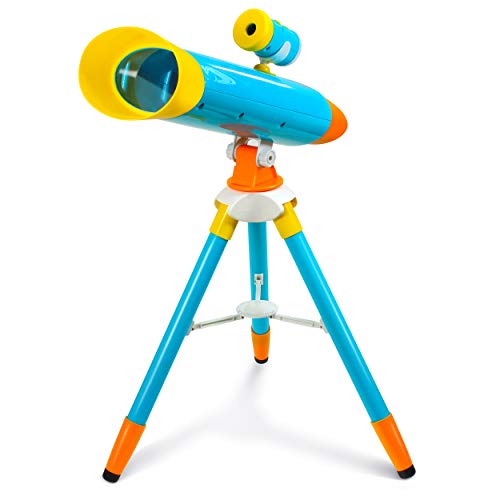 TOP CHOICEBest for younger kids (3–12)Little Experimenter Projector Telescope, 24 Space Images, STEM Kids 3-12View on Amazon
- 3
 TOP CHOICEBest for space-themed giftingNASA Lunar Telescope for Kids Ages 8-12 with Tripod and Finder ScopeView on Amazon
- 4
 Best for hands-on buildingSmartivity DIY Pocket Telescope STEM Toy & Science Kit for Kids 8-14View on Amazon
- 5
 Best budget pickTelescope for Kids, 50mm 100x Silver Beginner Telescope with TripodView on Amazon
- 6
 Best for moon and animal viewingTelescope for Kids, Kids Telescope with Compass and 3 Eyepieces, Great Space ToysView on Amazon
- 7
 Best for travel and small spacesTelescope for Kids, Space Toys for Kids Includes Compass & 3 EyepiecesView on Amazon
Note on claims: Specifications below come from listing names and manufacturer descriptions. Where a detail is not clearly stated, we leave it out rather than guess.
Our Top Picks
Quick Comparison
| Product | Best for | Key feature |
|---|---|---|
| Gskyer Telescope, 70mm Aperture 400mm AZ Mount | Older beginners who want real views | 70mm aperture with phone adapter and remote |
| Little Experimenter Projector Telescope | Ages 3–12 who like space pictures | Projects 24 space images |
| NASA Lunar Telescope for Kids Ages 8-12 | Moon viewing and NASA-themed gifts | Two eyepieces and tabletop tripod |
| Smartivity DIY Pocket Telescope | Kids who enjoy building | Collapsible 8x pirate spyglass |
| Telescope for Kids, 50mm 100x Silver | Simple first telescope for ages 6–12 | Two eyepieces, finder scope, moon guide |
| Telescope for Kids, Space Toys with Compass & 3 Eyepieces | Portable use and tight spaces | Compass and three eyepieces |
| Telescope for Kids, Kids Telescope with Compass and 3 Eyepieces | Moon and animal viewing | Compass and three eyepieces |
Gskyer Telescope, 70mm Aperture 400mm AZ Mount Astronomical Refracting Telescope for Kids Beginners
Gskyer Telescope, 70mm Aperture 400mm AZ Mount Astronomical Refracting Telescope for Kids Beginners – Travel Telescope with Carry Bag, Phone Adapter and Wireless Remote.
Best for: Older beginners who want a real refracting telescope with more light-gathering power than a toy scope.
This is the most grown-up option on the list. It suits a child around ten or older, or a family that wants to share the view. The 70mm aperture and altazimuth mount are common in beginner refractors, and the bundled carry bag and phone adapter help with travel and photos.
Key specs
- 70mm aperture refracting optics
- 400mm focal length
- AZ (altazimuth) mount
- Includes carry bag, phone adapter and wireless remote
Pros
- Larger aperture than most kids’ toy telescopes
- Carry bag makes it easy to take outdoors or on trips
- Phone adapter and remote support photo and video attempts
Cons
- Setup takes more patience than a simple tabletop scope
- Younger children may need an adult to help aim it
Bottom line: A strong pick for a school-age child who is already curious about the night sky and will stick with a slightly more involved setup.
View on AmazonLittle Experimenter Projector Telescope, 24 Space Images, STEM Kids 3-12
Little Experimenter Projector Telescope, 24 Space Images, STEM Kids 3-12 | STEM Science Toy, Learning Gift for Boys & Girls Ages 3-12
Best for: Younger kids who enjoy space pictures more than eyepiece viewing.
This product works more like a projector than a true telescope, so it is best for the youngest children on the list. It fits a bedroom or classroom wall and gives a quick, low-stress way to explore space themes without any sky-watching.
Key specs
- Projects 24 space images
- Designed for ages 3–12
Pros
- No outdoor setup or night-time viewing required
- Easy for very young children to operate
- Good as a STEM or learning gift
Cons
- Does not show the real sky, moon or planets through an eyepiece
- Older kids may outgrow it quickly
Bottom line: Pick this for a preschooler or early elementary child who will enjoy the pictures, not for a child who wants to observe the moon.
View on AmazonNASA Lunar Telescope for Kids Ages 8-12 with Tripod and Finder Scope
NASA Lunar Telescope for Kids Ages 8-12 with Tripod and Finder Scope | 90x Magnification, Two Eyepieces, Tabletop Tripod, Beginner Astronomy, Space Toys, NASA Birthday Gift
Best for: Moon viewing and families who like space-themed gifts with a NASA connection.
The moon is the easiest first target for most beginners, and this telescope is built around that idea. The tabletop tripod keeps setup simple, and the two eyepieces give kids a choice of magnification as they learn what works.
Key specs
- Advertised 90x magnification
- Two eyepieces
- Tabletop tripod and finder scope
- Designed for ages 8–12
Pros
- The moon is an achievable first target
- Tabletop tripod is easy to set up on a porch or deck
- Two eyepieces let kids compare magnifications
Cons
- High advertised magnification is limited by small optics, so images can be soft
- Not ideal for detailed planet viewing
Bottom line: A good gift for an eight-to-twelve-year-old who wants to find the moon and craters, with realistic expectations about image sharpness.
View on AmazonSmartivity DIY Pocket Telescope STEM Toy & Science Kit for Kids 8-14
Smartivity DIY Pocket Telescope STEM Toy & Science Kit for Kids 8-14 | 8x Collapsible Pirate Spyglass, Christmas & Birthday Gift for Boys & Girls 8, 9, 10, 11, 12, 13 & 14 Years Old
Best for: Kids who enjoy building something before using it.
This kit is more of a craft-and-science project than a serious observing tool. Assembling the pocket telescope teaches basic optics and gives children a reason to look at the world around them, not just the sky.
Key specs
- 8x collapsible pirate spyglass style
- Designed as a DIY STEM kit
- Suitable for ages 8–14
Pros
- Build step teaches how lenses work together
- Pocket size makes it easy to carry
- Works well as a rainy-day activity
Cons
- Low magnification, not designed for astronomy
- Assembly can take a while for younger kids
Bottom line: Choose this if your child wants a hands-on project more than a stargazing instrument.
View on AmazonTelescope for Kids, 50mm 100x Silver Beginner Telescope with Tripod
Telescope for Kids, 50mm 100x Silver Beginner Telescope with Tripod | 2 Eyepieces, Finder Scope, Moon Observation Guide, STEM Astronomy Fun, Educational Toy Gift for Boys & Girls Ages 6-12
Best for: A simple first telescope for a child aged six to twelve on a moderate budget.
A 50mm refractor with a tripod, finder scope and moon guide is a classic beginner setup. It gives families a real telescope without a steep learning curve, and the included guide helps a first-timer find targets.
Key specs
- 50mm aperture
- Advertised 100x magnification
- Two eyepieces, finder scope and tripod
- Includes moon observation guide
Pros
- Finder scope helps locate targets
- Moon guide gives kids something to look for
- Good balance of simplicity and capability
Cons
- Advertised 100x is more than a small scope can use well
- Tripod may feel wobbly at high magnification
Bottom line: A sensible first telescope for a child who wants to observe the moon and bright objects, with the understanding that low magnification gives the best views.
View on AmazonTelescope for Kids, Space Toys for Kids Includes Compass & 3 Eyepieces
Telescope for Kids, Space Toys for Kids Includes Compass & 3 Eyepieces, Great Portable Telescope as Astronomy Gifts, Educational STEM Kit for Boys and Girls to See Moon
Best for: Portable use and families with limited space.
Compact telescopes with a compass and three eyepieces are easy to move from room to room or pack for a trip. The compass is useful for teaching direction-finding alongside sky observation.
Key specs
- Includes compass
- Three eyepieces
- Portable design
Pros
- Easy to store and carry
- Compass adds a navigation lesson
- Three eyepieces offer more viewing options
Cons
- Small optics limit detail
- Specifications vary between similar listings, so check the exact model
Bottom line: A practical choice for a child who will take the telescope on trips or use it in a small apartment.
View on AmazonTelescope for Kids, Kids Telescope with Compass and 3 Eyepieces, Great Space Toys
Telescope for Kids, Kids Telescope with Compass and 3 Eyepieces, Great Space Toys for Boys & Girls, STEM Educational Gifts for Astronomy Beginners to See Moon and Animals
Best for: Kids who want to look at the moon and nearby animals or landscapes during the day.
Several telescopes in this class are marketed for both sky and daytime use. The three eyepieces make it easy to switch between a wide view and a closer one, which helps children find what they are looking for.
Key specs
- Includes compass
- Three eyepieces
- Designed for moon and nature viewing
Pros
- Works for daytime nature viewing as well as the night sky
- Three eyepieces give flexible magnification
- Good educational gift
Cons
- Not built for faint deep-sky objects
- Build quality on budget kids’ scopes varies
Bottom line: A good all-round pick for a child who wants both backyard nature and moon viewing from one telescope.
View on AmazonBuying Guide
Age and Experience Level
Children under about eight usually do best with projectors or very simple scopes, because the setup and aiming are hard for them alone. Kids from roughly eight to twelve can handle a tabletop tripod and a finder scope with a little help. Older children may want a larger aperture and a sturdier mount. Matching the product to the child’s age prevents frustration more than any other single factor.
Good picks for this: Little Experimenter Projector Telescope; NASA Lunar Telescope for Kids Ages 8-12
Aperture and Light-Gathering
Aperture, the diameter of the main lens or mirror, matters more than advertised magnification. A 70mm refractor gathers noticeably more light than a 50mm one, which makes faint objects easier to see. When comparing listings, look for aperture first and treat very high magnification claims with caution, since small optics cannot support them well.
Good picks for this: Gskyer Telescope, 70mm Aperture 400mm AZ Mount; Telescope for Kids, 50mm 100x Silver Beginner Telescope
Mount and Stability
A wobbly mount ruins the view for children. Tabletop tripods are easy to set up but can shake, especially with eyepieces that magnify a lot. An altazimuth mount moves up-down and side-to-side and is simple for beginners. Set the telescope on a firm surface, such as a deck rail or sturdy table, and avoid grass or soft ground.
Good picks for this: NASA Lunar Telescope for Kids Ages 8-12; Gskyer Telescope, 70mm Aperture 400mm AZ Mount
Eyepieces and Magnification
Two or three eyepieces let children experiment. Lower magnification gives wider, brighter views and is easier to aim, while higher magnification shows more detail but makes the image dimmer and shakier. Plan to start on low power and move up only when the image is steady.
Good picks for this: Telescope for Kids, Space Toys for Kids Includes Compass & 3 Eyepieces; Telescope for Kids, Kids Telescope with Compass and 3 Eyepieces
Portability and Storage
If the telescope will live in a closet or travel to a campsite, weight and size matter. Compact models with a carry bag are easier to manage, and a tabletop design takes less room than a full tripod. Consider whether your child will carry it alone.
Good picks for this: Telescope for Kids, Space Toys for Kids Includes Compass & 3 Eyepieces; Gskyer Telescope, 70mm Aperture 400mm AZ Mount
Educational Value and Hands-On Learning
Some gifts are mainly about the activity, not the view. A build-it-yourself kit teaches how lenses focus light, and a projector teaches space themes without requiring a clear night. Match the learning style to your child: builders prefer kits, and curious observers prefer real sky viewing.
Good picks for this: Smartivity DIY Pocket Telescope; Little Experimenter Projector Telescope
Durability and Care
Children handle equipment roughly. Look for sturdy tubes, secure eyepiece fittings and simple adjustments that will not break under normal use. Keep lens caps on, store the telescope indoors, and wipe the lenses gently with a soft cloth. Avoid touching the glass with fingers, and never point a telescope at the sun without a proper solar filter, because direct sunlight can cause permanent eye damage.
Good picks for this: Telescope for Kids, 50mm 100x Silver Beginner Telescope; Telescope for Kids, Kids Telescope with Compass and 3 Eyepieces
FAQ
What is the best christmas telescope for kids project gift for a young child?
For children around three to seven, a projector-style product is usually the easiest choice, because it needs no night-time setup and no aiming. The Little Experimenter Projector Telescope fits that age range according to its listing.
Can a kids’ telescope show planets?
Many beginner telescopes can show the moon clearly and bright planets such as Jupiter and Venus as small points or disks, but detail will be limited. Larger apertures, like 70mm, show more than 50mm scopes. Set realistic expectations before the first night outside.
What magnification does a child need?
Low to moderate magnification is best for beginners. Advertised magnifications like 100x are often impractical with small optics. Start on the lowest-power eyepiece, find your target, then increase power gradually.
Do kids need an adult to set up the telescope?
Children aged about eight to twelve can usually assemble a tabletop telescope with some guidance. Younger kids and more complex altazimuth mounts often need a parent for the first setup. Practicing in daylight makes the first night easier.
Is a telescope safe for kids to use?
Telescopes are safe for night-sky viewing, but never point any telescope at the sun without a certified solar filter, since looking at the sun can cause serious eye injury. Consider asking an optometrist or eye care professional if you have concerns about a child’s vision.
How do I find things in the sky with a beginner telescope?
Start with the moon, which is bright and easy to locate. Use the finder scope to center the target, then look through the lowest-power eyepiece. A simple star map or a free sky-mapping app can help identify what to look for each night.
Conclusion
The right christmas telescope for kids project gift depends mostly on the child’s age, interest and patience. For younger children who enjoy space images, the projector-style Little Experimenter fits well. For kids who want to observe the moon, the NASA Lunar Telescope or the 50mm beginner scope are practical starting points. Children who enjoy building should look at the Smartivity pocket telescope kit, while older or more committed beginners may prefer the 70mm Gskyer refractor. The compact kids’ telescopes with compasses and three eyepieces suit portable use and daytime nature viewing. Whichever you choose, plan a short first session with the moon and keep expectations modest, because a steady, simple view is what keeps young observers coming back.
Sources
- Space science education resources, moon facts and sky-observing activities for students (nasa.gov)
- Product safety guidance for toys and children's products, including age labeling (cpsc.gov)
- Eye safety information from the American Academy of Ophthalmology, including guidance on solar viewing
Before you buy: helpful guides
- Tasco Beginner Telescope 45T: Setup, First Views and Tips for Kids
- Emerson 50x/100x Refractor Telescope: Is It a Good Fit for Kids?
- What Is a 600 X 50 Refractor Telescope and Is It Good for Kids?
- Celestron PowerSeeker 60EQ Refractor Telescope: Is It Right for Kids?
- Saxon Novo 607AZ Refractor Kids Telescope: Is It Right for Your Family?
Related reading
- Top 5 Telescopes with 30x Magnification for Kids Worth Considering in 2026
- Top 5 DIY Telescope Kits for Kids Worth Considering in 2026
About Caleb Morgan
Caleb Morgan is part of our editorial team and reviews and edits our astronomy for kids, teens & families guides, checking product details against manufacturer specifications and owner feedback.
About the author
Caleb Morgan writes reviews and buying guides for Youth in Astronomy.