Top 6 Christmas Telescopes for Kids Science Picks for 2026
Looking for a christmas telescope for kids science gift? Compare six beginner-friendly picks by setup, magnification and build to find the right fit.
 By Caleb Morgan
Updated November 24, 2026
 By Caleb Morgan
Updated November 2026
Shopping for a christmas telescope for kids science gift can feel tricky, because many boxes promise huge magnification but deliver blurry views and frustrating setups. This guide focuses on what really matters for young stargazers: a sturdy mount, a clear and simple eyepiece system, a manageable size, and enough educational value to keep a child interested after the wrapping paper is gone. Each pick below is compared on fit for beginners, practical features, and the kind of owner feedback patterns that tend to show up for this type of product.
Our top picks at a glance
- 1TOP CHOICEBest overallGskyer Telescope, 70mm Aperture 400mm AZ MountView on Amazon
- 2
 TOP CHOICEBest for moon viewingNASA Lunar Telescope for Kids Ages 8-12 with Tripod and Finder ScopeView on Amazon
- 3
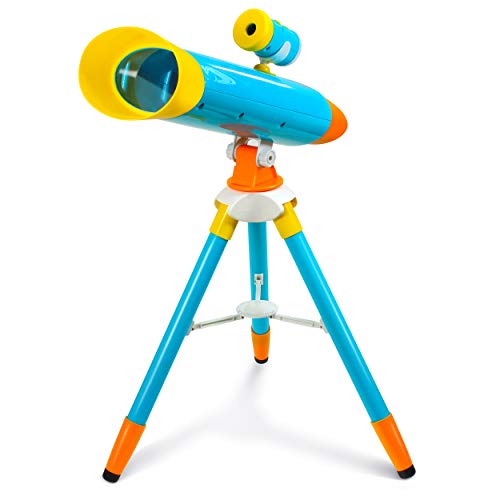 TOP CHOICEBest for young childrenLittle Experimenter Projector Telescope, 24 Space Images, STEM Kids 3-12View on Amazon
- 4
 Best for high magnificationTelescope for Kids, 50mm 100x Beginner Telescope with TripodView on Amazon
- 5
 Best for travelDianfan Telescope for Kids & Adults, 80mm 500mm Portable Refractor, PurpleView on Amazon
- 6
 Best for a combined science kitPozifu 2 in 1 Kids Microscope and Telescope, BlueView on Amazon
Our Top Picks
Before the individual reviews, here is a quick side-by-side view of the six products. Use it to narrow your choice, then read the detailed notes below.
| Product | Best for | Key feature |
|---|---|---|
| Gskyer Telescope, 70mm Aperture 400mm AZ Mount | Families wanting a real refractor | 70mm objective with carry bag and phone adapter |
| NASA Lunar Telescope for Kids Ages 8-12 | Moon and planet viewing | Tabletop tripod with two eyepieces |
| Little Experimenter Projector Telescope | Ages 3 to 12, first exposure | Projects 24 space images |
| Telescope for Kids, 50mm 100x Beginner Telescope | Hands-on learners aged 6 to 12 | 100x magnification with finder scope |
| Dianfan Telescope for Kids & Adults, 80mm 500mm Portable Refractor | Travel and camping trips | 80mm aperture with backpack and tripod |
| Pozifu 2 in 1 Kids Microscope and Telescope | Mixed science curiosity | Microscope and telescope in one kit |
Gskyer Telescope, 70mm Aperture 400mm AZ Mount
Gskyer Telescope, 70mm Aperture 400mm AZ Mount Astronomical Refracting Telescope for Kids Beginners – Travel Telescope with Carry Bag, Phone Adapter and Wireless Remote.
Best for: Families who want a real refractor they can take outside and use for years.
This is one of the more capable options on the list, aimed at kids around age 8 and up who are ready to learn proper alignment. Parents who set it up with their children usually find it a good way to teach focusing and sky navigation.
Key specs
- 70mm objective aperture
- 400mm focal length
- Altazimuth (AZ) mount
- Includes carry bag and phone adapter
Pros
- Larger aperture gathers more light than smaller kids’ scopes
- Carry bag makes it practical for trips
- Phone adapter supports photos of the moon
Cons
- Requires some patience during first setup
- Higher magnifications show more shake on a lightweight mount
Bottom line: A strong choice for a curious older child or a family that wants one telescope to grow with them.
View on AmazonNASA Lunar Telescope for Kids Ages 8-12 with Tripod and Finder Scope
NASA Lunar Telescope for Kids Ages 8-12 with Tripod and Finder Scope | 90x Magnification, Two Eyepieces, Tabletop Tripod, Beginner Astronomy, Space Toys, NASA Birthday Gift
Best for: Moon viewing and simple planet spotting for kids aged 8 to 12.
The NASA branding is mostly a theme, but the product is built around the moon, which is the easiest target for beginners. It suits a child who wants a clear first look at craters without a complicated setup.
Key specs
- Advertised 90x magnification
- Two eyepieces
- Tabletop tripod and finder scope
Pros
- Quick to set up on a table or windowsill
- Two eyepieces allow simple magnification changes
- Finder scope helps locate targets
Cons
- Tabletop tripod is less stable outdoors
- Stated magnification is higher than the aperture comfortably supports
Bottom line: Best for a child who mainly wants to explore the moon and enjoys a ready-to-use setup.
View on AmazonLittle Experimenter Projector Telescope, 24 Space Images, STEM Kids 3-12
Little Experimenter Projector Telescope, 24 Space Images, STEM Kids 3-12 | STEM Science Toy, Learning Gift for Boys & Girls Ages 3-12
Best for: Young children, ages 3 to 12, who are just starting to explore space.
This is more of a projection toy than a traditional telescope. It fits well for younger siblings or as a first step before a real optical instrument.
Key specs
- Includes 24 space images
- Designed for ages 3 to 12
Pros
- Very easy for small hands to use
- Gentle introduction to space themes
- Low setup demands
Cons
- Does not show real stars or planets through optics
- Children who want true observing may outgrow it quickly
Bottom line: A good gift for a preschooler or early reader, but not a substitute for a real telescope.
View on AmazonTelescope for Kids, 50mm 100x Beginner Telescope with Tripod
Telescope for Kids, 50mm 100x Beginner Telescope with Tripod | 2 Eyepieces, Finder Scope, Hands-On STEM Learning, Space Exploration Fun, Educational Toy Gift for Boys & Girls Ages 6-12
Best for: Hands-on learners aged 6 to 12 who want a complete starter kit.
This model is designed as a learning tool, with two eyepieces and a finder scope, so children can practice aiming and comparing magnifications.
Key specs
- 50mm aperture
- Advertised 100x maximum magnification
- Two eyepieces, finder scope, tripod
Pros
- Complete starter package
- Finder scope helps beginners locate objects
- Good for hands-on STEM activities
Cons
- Small aperture limits faint object viewing
- High advertised magnification can look soft
Bottom line: A solid pick for a school-age child who wants to learn the basics with a kit that feels complete.
View on AmazonDianfan Telescope for Kids & Adults, 80mm 500mm Portable Refractor, Purple
Dianfan Telescope for Kids & Adults, 80mm 500mm Portable Refractor, Purple | High Powered Astronomy Travel Telescope for Beginners, Fully Multi-Coated Optics, Tripod, Phone Adapter, Stickers & Backpac
Best for: Families who travel to camp or visit darker skies and want something portable.
The larger 80mm aperture collects more light, which helps with views of the moon and bright planets. It is designed to be carried, so it works well for outings beyond the backyard.
Key specs
- 80mm aperture
- 500mm focal length
- Includes tripod, phone adapter and backpack
Pros
- Larger aperture than most kids’ starter scopes
- Backpack simplifies transport
- Phone adapter supports sharing views
Cons
- Heavier than tabletop models
- Needs a stable surface for comfortable viewing
Bottom line: Best for families who expect to take the telescope out of the house regularly.
View on AmazonPozifu 2 in 1 Kids Microscope and Telescope, Blue
Pozifu 2 in 1 Kids Microscope and Telescope, STEM Educational Toy, Blue | 1000X Microscope for Kids, 10X Telescope, 2.0" Screen, Magnifying Glass Science Kits, Birthday Gift for Boys Girls Ages 3–12
Best for: Kids whose curiosity covers both the very small and the very far away.
This kit pairs a microscope with a telescope, which makes it a useful science gift for children who like comparing different scales of observation.
Key specs
- Advertised 1000x microscope
- Advertised 10x telescope
- 2.0 inch screen
Pros
- Covers two science topics in one box
- Screen makes viewing easier for groups
- Suitable for a wide age range
Cons
- The telescope is basic and not suited to deep-sky viewing
- Advertised magnifications are high for a toy-grade optic
Bottom line: A good choice for a child who wants a broad science gift rather than a dedicated astronomy instrument.
View on AmazonBuying Guide
Aperture and light gathering
Aperture is the diameter of the main lens or mirror, and it matters more than advertised magnification. Larger apertures gather more light, so the moon, bright planets and brighter deep-sky objects look clearer. For kids’ telescopes, apertures between 50mm and 80mm are common and generally give a more satisfying view than very small tubes.
Good picks for this: Gskyer Telescope, 70mm Aperture 400mm AZ Mount; Dianfan Telescope for Kids & Adults, 80mm 500mm Portable Refractor
Be skeptical of magnification claims
Magnification is calculated by dividing the telescope’s focal length by the eyepiece’s focal length. Very high numbers are easy to advertise but hard to use, because the image gets dimmer and shakier. A realistic rule for beginners is to focus on views that look sharp at moderate magnification.
Good picks for this: NASA Lunar Telescope for Kids Ages 8-12; Telescope for Kids, 50mm 100x Beginner Telescope
Mount type and stability
An altazimuth mount moves up-down and side-to-side, which is intuitive for children. A tabletop tripod is easy to store but can wobble outdoors. Look for a sturdy base and locking knobs. Stability matters more than magnification for a comfortable experience.
Good picks for this: Gskyer Telescope, 70mm Aperture 400mm AZ Mount; Dianfan Telescope for Kids & Adults, 80mm 500mm Portable Refractor
Age and skill level
Younger children often enjoy projection toys and simple microscopes, while older kids can handle real optics and alignment steps. Matching the product to the child’s reading ability and patience reduces frustration. Manufacturers typically list an age range, and it is worth following it.
Good picks for this: Little Experimenter Projector Telescope, 24 Space Images, STEM Kids 3-12; Pozifu 2 in 1 Kids Microscope and Telescope
Portability and storage
If the telescope will live in a closet, a compact tabletop model is practical. If you plan trips to campgrounds or dark-sky sites, a carry bag or backpack makes a real difference. Check the weight and whether the tripod folds down.
Good picks for this: Dianfan Telescope for Kids & Adults, 80mm 500mm Portable Refractor; Gskyer Telescope, 70mm Aperture 400mm AZ Mount
Included accessories
Finder scopes, two eyepieces, phone adapters and star charts all add to the experience. A finder scope in particular helps beginners aim, which reduces the early frustration that makes many kids give up. Count the accessories that are actually useful for your child’s age.
Good picks for this: Telescope for Kids, 50mm 100x Beginner Telescope; NASA Lunar Telescope for Kids Ages 8-12
Durability and care
Children often carry telescopes around, so plastic latches, thin tripod legs and fragile eyepieces can wear quickly. Keep the optics covered, avoid pointing the telescope at the sun, and store it indoors when not in use. Consult a qualified adult or a local astronomy club before attempting solar observing, since direct sunlight can cause permanent eye damage.
Good picks for this: Gskyer Telescope, 70mm Aperture 400mm AZ Mount; Pozifu 2 in 1 Kids Microscope and Telescope
FAQ
What age is a telescope good for a child?
Many telescopes are labeled for ages 6 and up, but younger children often enjoy projection toys or simple microscopes. The best age depends on the child’s patience and reading ability. Starting with an easy kit and moving up later is a reasonable path.
Is higher magnification always better?
No. Magnification without enough light makes images dim and unstable. A moderate magnification with a clear, steady view is more satisfying for beginners than an extreme number that cannot be used well.
What can a kid actually see through a beginner telescope?
The moon is the most rewarding first target, with craters and mountains visible through most beginner scopes. Jupiter’s largest moons and Saturn’s rings can be seen with a decent setup on a clear night. Faint galaxies and nebulae usually require larger apertures and dark skies.
Do I need to be an adult to set up the telescope?
Younger children usually need help with the tripod and alignment, while older kids can often handle it alone after a few tries. Doing the first setup together is a good way to teach the process.
Can a telescope be used during the day?
Yes, for daytime landscapes or birds, but never point any telescope at the sun without proper solar filters made for that purpose. Looking at the sun can cause serious eye injury, so consult an experienced adult or astronomy club before any solar viewing.
Do these telescopes work with a phone for photos?
Some models include a phone adapter, which can capture simple moon photos. Results vary with the phone’s camera and the steadiness of the mount, so expect modest images rather than detailed astrophotography.
Where should we observe from?
A backyard or open area away from streetlights gives the best experience. Even in towns, the moon and bright planets are visible. Check local light pollution maps and plan around the moon phase for better contrast.
Conclusion
For most families, the Gskyer Telescope, 70mm Aperture 400mm AZ Mount offers the strongest mix of aperture and room to grow, while the NASA Lunar Telescope for Kids Ages 8-12 is a simple choice for moon-focused beginners. Younger children will get more from the Little Experimenter Projector Telescope, and travelers may prefer the Dianfan Telescope for Kids & Adults, 80mm 500mm Portable Refractor. The Telescope for Kids, 50mm 100x Beginner Telescope suits hands-on learners, and the Pozifu 2 in 1 Kids Microscope and Telescope fits children who enjoy several science topics at once. Match the choice to your child’s age, your viewing location and how much setup time you want to spend.
For more background before you buy, see What Is a 600 X 50 Refractor Telescope and Is It Good for Kids?, Top 5 Telescopes with 30x Magnification for Kids Worth Considering in 2026, and Discovery Kids Telescope Instructions: A Step-by-Step Setup Guide for Beginners. Families interested in building something together can also read How to Make a Paper Telescope for Kids: A Step-by-Step Guide and Science Solar System Model: A Step-by-Step Guide for Kids.
Sources
- Age-appropriate space science activities, lunar observation guides and general astronomy education for families (nasa.gov)
- Toy safety standards, small-parts warnings and age-labeling guidance for children's products (cpsc.gov)
- Beginner observing tips, telescope basics and local club directories
Before you buy: helpful guides
About Caleb Morgan
Caleb Morgan is part of our editorial team and reviews and edits our astronomy for kids, teens & families guides, checking product details against manufacturer specifications and owner feedback.
About the author
Caleb Morgan writes reviews and buying guides for Youth in Astronomy.