3 Best Large Dobsonian Telescope Mirrors for Backyard Observing (2026)
Compare large dobsonian telescope mirrors by aperture, focal length and fit for DIY builds. See three picks, key specs and a buying guide before you buy.
 By Owen Palmer
Updated November 26, 2026
 By Owen Palmer
Updated November 2026
Shoppers searching for large dobsonian telescope mirrors usually want one of two things: a primary mirror big enough to show faint galaxies and nebulae, or a complete replacement or DIY mirror for an existing tube. This guide compares three mirror options with the criteria that matter most: aperture (the diameter of the primary mirror, which sets how much light it gathers), focal ratio (which affects field of view and how forgiving the optics are), secondary mirror size, mounting compatibility and the build skill required. Specifications below come from the listing names and manufacturer-published figures.
Our top picks at a glance
- 1TOP CHOICEBest overallSKYOPTIKST 203mm DOB Telescope Primary Mirror of Newtonian Telescope wView on Amazon
- 2
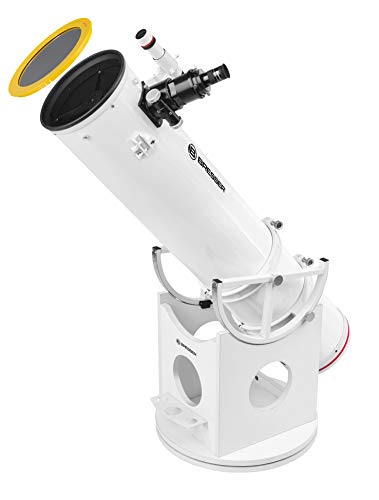 Best for compact replacement buildsBresser Optik Messier 8 Dobsonian Mirror Telescope 400x Magnification (Max)View on Amazon
- 3
 Best budget pick for DIY projectsReflector Main Mirror 114mm with Secondary Mirror 25mm, Newton ReflectView on Amazon
Our Top Picks
Quick Comparison
| Product | Best for | Key feature |
|---|---|---|
| SKYOPTIKST 203mm DOB Telescope Primary Mirror | Serious deep-sky observing | 203mm (8-inch) aperture, 1600mm focal length |
| Bresser Optik Messier 8 Dobsonian Mirror Telescope | Compact replacement builds | 8-inch Dobsonian format with simple mounting |
| Reflector Main Mirror 114mm Newton Kit | Budget DIY projects | 114mm primary with 25mm secondary |
SKYOPTIKST 203mm DOB Telescope Primary Mirror of Newtonian Telescope with 40mm Secondary Mirror, Focal Length 1600mm
SKYOPTIKST 203mm DOB Telescope Primary Mirror of Newtonian Telescope with 40mm Secondary Mirror, Focal Length 1600mm
Best for: Serious deep-sky observing with a large light-gathering primary mirror.
This is the option for observers who want the most light for the money of aperture. A 203mm (8-inch) primary collects far more light than a 114mm or 130mm mirror, which makes faint galaxies, globular clusters and planetary nebulae easier to see from a dark site. It suits builders comfortable with mirror cells, collimation and tube fabrication.
Key specs
- Primary mirror diameter: 203mm (8 inches)
- Focal length: 1600mm (as listed)
- Secondary mirror: 40mm
- Optical type: Newtonian (Dobsonian-style mount)
Pros
- Large aperture gathers substantially more light than smaller mirror options
- Long focal length suits high-power planetary viewing
- Works as a direct upgrade path for experienced builders
Cons
- Requires a suitable tube, cell and collimation setup; not a complete telescope
- Long focal length gives a narrower field of view for wide-field objects
Bottom line: Pick this if you already have, or plan to build, a sturdy Dobsonian tube and want the largest aperture you can reasonably handle.
View on AmazonBresser Optik Messier 8 Dobsonian Mirror Telescope 400x Magnification (Max)
Bresser Optik Messier 8 Dobsonian Mirror Telescope 400x Magnification (Max)
Best for: Compact replacement builds and 8-inch-class mirror upgrades.
Owners who want an 8-inch-class mirror in a familiar Dobsonian format, without a full build from scratch, often find this a practical middle ground. It fits buyers who value a ready-to-mount design over a bare mirror kit.
Key specs
- Aperture class: 8-inch Dobsonian mirror format
- Listed maximum magnification: 400x (practical limits depend on seeing conditions)
Pros
- Aperture in the 8-inch range delivers strong deep-sky performance
- Dobsonian format is simple to set up and move outdoors
- Brand has a long-standing reputation for optics aimed at beginners and families
Cons
- Magnification claims are maximums; useful power is usually lower on most nights
- Still requires basic collimation and alignment know-how
Bottom line: A good choice for families moving up from a small refractor who want a larger mirror without a custom build.
View on AmazonReflector Main Mirror 114mm with Secondary Mirror 25mm, Newton Reflector Spherical Mirror for DIY Astronomical Telescope Mirror Kit
Reflector Main Mirror 114mm with Secondary Mirror 25mm, Newton Reflector Spherical Mirror for DIY Astronomical Telescope Mirror Kit
Best for: Budget DIY projects and first-time telescope builders.
This kit suits beginners who want to learn how a Newtonian reflector works by building one. Its smaller aperture means it is a less demanding first project and a good way to practice collimation before committing to a larger mirror.
Key specs
- Primary mirror diameter: 114mm (about 4.5 inches)
- Secondary mirror: 25mm
- Spherical primary mirror, Newtonian design
Pros
- Lower-cost entry point into mirror-based telescope building
- Smaller aperture is easier to collimate and handle for first-timers
- Good for learning optics before investing in a larger primary
Cons
- Much less light-gathering power than 8-inch options
- Spherical mirrors show more coma and softer edges at high power than parabolic designs
Bottom line: Best for hobbyists and students who want a hands-on project and realistic expectations about what a 114mm mirror can show.
View on AmazonBuying Guide
Aperture and Light Gathering
Aperture is the single biggest factor in what you can see. Doubling the diameter of a mirror roughly quadruples its light-gathering area, which is why an 8-inch mirror shows noticeably more faint detail than a 4.5-inch one under the same sky. For deep-sky work, aim for at least 8 inches if your budget and skill allow.
Good picks for this: SKYOPTIKST 203mm DOB Telescope Primary Mirror, Bresser Optik Messier 8 Dobsonian Mirror Telescope
Focal Ratio and Focal Length
Focal length and focal ratio (focal length divided by aperture) control magnification and field of view. Longer focal lengths give higher magnification and narrower views, suited to planets and the Moon. Shorter focal ratios give wider fields that suit nebulae and star clusters. Check the focal length in the listing before buying an eyepiece set.
Good picks for this: SKYOPTIKST 203mm DOB Telescope Primary Mirror, Reflector Main Mirror 114mm Newton Kit
Secondary Mirror Size
The secondary mirror redirects light to the eyepiece and blocks a small part of the incoming light. A secondary that is too small for the primary can cause vignetting, where the edges of the field go dark. Match the secondary to the focal ratio and check that the listing states its size.
Good picks for this: Reflector Main Mirror 114mm Newton Kit, SKYOPTIKST 203mm DOB Telescope Primary Mirror
Mount and Tube Compatibility
A bare mirror must fit a tube, cell and altitude-azimuth mount. Measure your existing tube’s inside diameter and confirm the mirror’s thickness and mounting points before ordering. Mismatched cells are one of the most common causes of wasted money in mirror upgrades.
Good picks for this: Bresser Optik Messier 8 Dobsonian Mirror Telescope, SKYOPTIKST 203mm DOB Telescope Primary Mirror
Mirror Quality and Figure
Spherical mirrors are cheaper and easier to make but show more aberration at high power. Parabolic mirrors correct this and perform better for planets and high-magnification work. Look for the listing to state the optical figure, and read owner feedback about edge sharpness.
Good picks for this: Reflector Main Mirror 114mm Newton Kit, Bresser Optik Messier 8 Dobsonian Mirror Telescope
Skill Level and Collimation
Every Newtonian needs collimation, the alignment of the primary and secondary mirrors. Plan on learning it, and make sure you have a collimation cap or laser tool. Larger mirrors are less forgiving of misalignment, so beginners should practice on a smaller mirror first.
Good picks for this: Reflector Main Mirror 114mm Newton Kit, Bresser Optik Messier 8 Dobsonian Mirror Telescope
Care, Storage and Durability
Mirror coatings can be damaged by fingerprints, dust rubbed in too hard or rough cleaning. Store mirrors in padded cases, handle them by the edges, and clean only with proper optical solution and a soft brush or air blower. For specific care questions, consult the manufacturer’s instructions or a qualified optics technician.
Good picks for this: SKYOPTIKST 203mm DOB Telescope Primary Mirror, Bresser Optik Messier 8 Dobsonian Mirror Telescope
FAQ
What size mirror is best for deep-sky objects?
Most observers find an 8-inch (203mm) mirror a strong balance of light gathering and portability for galaxies and nebulae. Larger mirrors show more, but they are heavier and harder to transport.
Do I need a Dobsonian mount for a large mirror?
A Dobsonian mount is a simple, stable altitude-azimuth design that suits large mirrors well. Other mounts work too, but the Dobsonian format is the most common for mirror-based builds.
Is a spherical or parabolic mirror better?
Parabolic mirrors correct spherical aberration and give sharper images at high magnification. Spherical mirrors are easier to make and often adequate for wide-field and low-power viewing.
How often should I collimate a Newtonian?
Collimate whenever the image looks off-center or stars show comet-like tails, and check it before each observing session. Transport and temperature changes can knock mirrors out of alignment.
Can a beginner build a mirror telescope from a kit?
Yes, many beginners complete kit builds with patience and clear instructions. Start with a smaller mirror to learn collimation and tube assembly before attempting a larger project.
How much magnification can I use?
A common rule of thumb is about 50 times the aperture in inches as a practical maximum, although seeing conditions usually limit useful power to less. Listed maximum magnifications are often higher than what most nights support.
Conclusion
For the most light-gathering power, the SKYOPTIKST 203mm primary mirror is the strongest fit for experienced builders with a suitable tube. The Bresser Optik Messier 8 is a sensible choice for families and observers who want an 8-inch-class mirror in a more familiar Dobsonian format. The Reflector Main Mirror 114mm kit suits budget-minded beginners who want to learn optics and collimation before stepping up. Match your choice to your skill level, existing tube and the kinds of objects you most want to see.
Sources
- Background on telescope optics, light gathering and how aperture affects what you can observe (nasa.gov)
- Guidance on amateur telescope use, observing techniques and collimation basics
- Information on astronomy education and resources for amateur observers
Before you buy: helpful guides
- Apertura AD8 Dobsonian Telescope: A Step-by-Step Guide for Families
- Dolly for Dobsonian Telescope: A Step-by-Step Guide for Beginners
- Used Dobsonian Telescope for Sale: 6 Things to Check Before You Buy
- Apertura AD8 8 Inch Dobsonian Telescope: A Step-by-Step Guide for Beginners
- Telescope 8 Inch Dobsonian: How to Choose and Use One (7 Steps)
Related reading
About Owen Palmer
Owen Palmer is part of our editorial team and reviews and edits our astronomy for kids, teens & families guides, checking product details against manufacturer specifications and owner feedback.
About the author
Owen Palmer writes reviews and buying guides for Youth in Astronomy.