Explore Scientific FirstLight 114mm Refractor Telescope Compared (2026)
Compare five telescopes against explore scientific firstlight 114mm refractor telescope alternatives for families, with specs, pros, cons and buying tips.
 By Owen Palmer
Updated November 25, 2026
 By Owen Palmer
Updated November 2026
Families shopping for explore scientific firstlight 114mm refractor telescope options usually want one thing: a scope that shows real planets, the Moon and bright deep-sky targets without a frustrating setup. This list compares five telescopes that cover different sizes, mount styles and budgets. Selection followed a research-based method: we reviewed manufacturer specifications, brand reputation and common owner feedback patterns, focusing on aperture, focal length, mount stability, included accessories and suitability for young observers. We did not test these products ourselves.
Our top picks at a glance
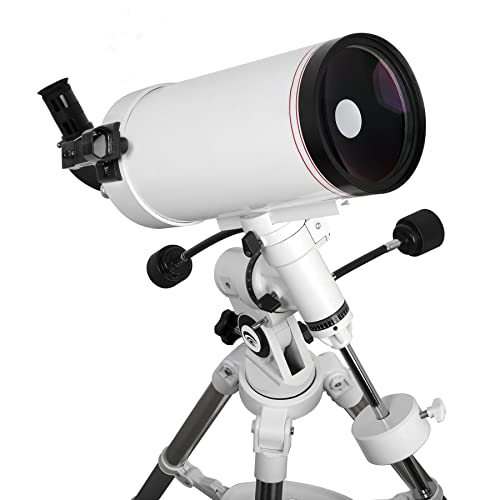
- 1TOP CHOICEBest overallExplore Scientific FirstLight 127mm Maksutov–Cassegrain Telescope with EQ3 MountView on Amazon
- 2
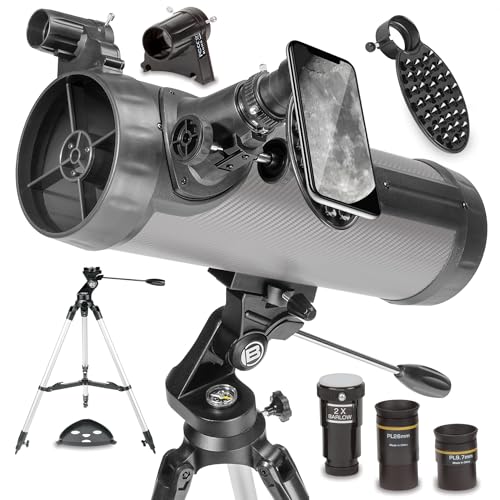 TOP CHOICEBest for small kitchensNational Geographic 114mm Reflector Telescope with Eyepieces Mount Smartphone AdapterView on Amazon
- 3
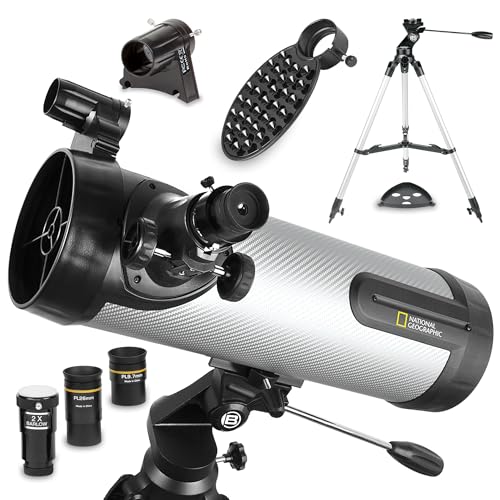 TOP CHOICEBest budget pickNational Geographic NT114CF 114mm Carbon Fiber Reflector Telescope, TripodView on Amazon
- 4
 Best for young astronomersExplore One 70mm Astronomical Refractor Telescope with Adjustable TripodView on Amazon
- 5
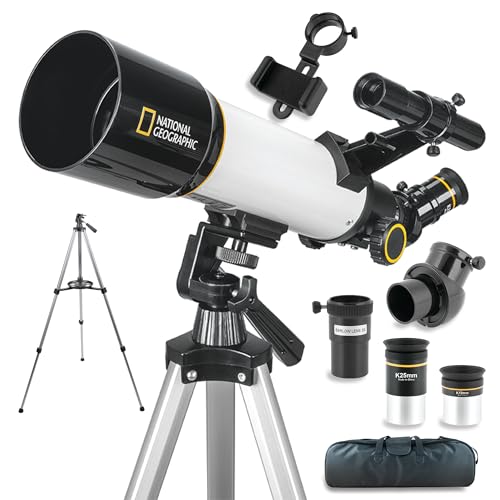 Best for quick family viewingNational Geographic Sky View 70mm Refractor Telescope with Panhandle MountView on Amazon
Our Top Picks
Quick Comparison
| Product | Best for | Key feature |
|---|---|---|
| Explore Scientific FirstLight 127mm Maksutov–Cassegrain Telescope with EQ3 Mount | Planets and the Moon with a sturdier mount | 127mm Maksutov–Cassegrain optics with EQ3 mount |
| National Geographic 114mm Reflector Telescope with Eyepieces Mount Smartphone Adapter | Small spaces and simple setups | 114mm reflector with smartphone adapter |
| National Geographic NT114CF 114mm Carbon Fiber Reflector Telescope | Beginners who want a light, portable scope | Carbon fiber tube, 500mm focal length |
| Explore One 70mm Astronomical Refractor Telescope with Adjustable Tripod | Young astronomers and first-time users | 70mm refractor with adjustable tripod and app support |
| National Geographic Sky View 70mm Refractor Telescope with Panhandle Mount | Quick family viewing sessions | 70mm refractor, 400mm focal length, panhandle mount |
Explore Scientific FirstLight 127mm Maksutov–Cassegrain Telescope with EQ3 Mount
Explore Scientific FirstLight 127mm Maksutov–Cassegrain Telescope with EQ3 Mount
Best for: Planetary and lunar viewing with a stable mount
This is the most capable option on the list. It suits families who plan to observe for many sessions and want a telescope that grows with their interest, especially for lunar detail and planets.
Key specs
- 127mm aperture
- Maksutov–Cassegrain optical design
- EQ3 equatorial mount
Pros
- Compact tube for a large aperture
- EQ3 mount offers smoother tracking than basic altazimuth mounts
- Well suited to high-magnification planetary views
Cons
- Heavier and more involved to set up than entry-level scopes
- Owners often report a learning curve with equatorial alignment
Bottom line: Best for families ready to invest time in learning the sky and who want serious planetary performance.
View on AmazonNational Geographic 114mm Reflector Telescope with Eyepieces Mount Smartphone Adapter
National Geographic 114mm Reflector Telescope with Eyepieces Mount Smartphone Adapter for Astronomy Astrophotography
Best for: Small spaces and simple setups
A reflector with a smartphone adapter fits families who want to photograph the Moon or share views on a screen without a complicated rig.
Key specs
- 114mm aperture reflector
- Includes eyepieces and smartphone adapter
Pros
- Large light-gathering aperture for its class
- Smartphone adapter simplifies lunar photos
- Good starting accessory set
Cons
- Reflector tubes need occasional collimation
- Smartphone photos of faint objects remain limited
Bottom line: A strong pick for families in apartments or small yards who want a bright, versatile scope.
View on AmazonNational Geographic NT114CF 114mm Carbon Fiber Reflector Telescope, Tripod
National Geographic NT114CF 114mm Carbon Fiber Reflector Telescope, Tripod | 500mm focal length f/4.4, 2 Plossl eyepieces, 2x Barlow lens, red dot finder, smartphone adapter, beginner astronomy
Best for: Beginners who want a light, portable scope
Carbon fiber construction keeps weight down, which helps when carrying the scope to a dark-sky site or back outside after a night indoors.
Key specs
- 114mm aperture
- 500mm focal length, f/4.4
- Two Plossl eyepieces and 2x Barlow lens
- Red dot finder
Pros
- Lightweight carbon fiber tube
- Included red dot finder simplifies aiming
- Two eyepieces plus Barlow offer useful magnification range
Cons
- Tripod can feel wobbly at higher magnifications
- Reflector optics require periodic alignment
Bottom line: Ideal for families who want a portable, ready-to-use reflector without a large upfront learning curve.
View on AmazonExplore One 70mm Astronomical Refractor Telescope with Adjustable Tripod
Explore One 70mm Astronomical Refractor Telescope with Adjustable Tripod | Astronomy app, beginner telescope for young astronomers and adult sky watchers
Best for: Young astronomers and first-time users
Designed for beginners, this refractor suits children and adults who want a simple, low-maintenance instrument for the Moon and bright planets.
Key specs
- 70mm aperture refractor
- Adjustable tripod
- Astronomy app compatibility per listing
Pros
- Refractor optics need no collimation
- Adjustable tripod suits different heights
- Approachable for kids
Cons
- Smaller aperture limits faint deep-sky views
- Higher magnifications can show softness
Bottom line: A good fit for young beginners who value easy setup over maximum light gathering.
View on AmazonNational Geographic Sky View 70mm Refractor Telescope with Panhandle Mount
National Geographic Sky View 70mm Refractor Telescope with Panhandle Mount | 400mm focal length, 2 eyepieces, 3x Barlow lens, smartphone adapter, beginner astronomy for kids and adults
Best for: Quick family viewing sessions
The panhandle mount and 400mm focal length make this a simple grab-and-go option for short evening sessions with the whole family.
Key specs
- 70mm aperture refractor
- 400mm focal length
- Two eyepieces and 3x Barlow lens
- Smartphone adapter
Pros
- Refractor design needs little maintenance
- Panhandle mount is quick to aim
- Smartphone adapter included
Cons
- Smaller aperture than the 114mm options
- Panhandle mounts can feel less steady at high power
Bottom line: Best for families who want a light, fast-setup scope for casual viewing.
View on AmazonBuying Guide
Aperture and Light Gathering
Aperture, the diameter of the main lens or mirror, matters more than magnification. A 114mm aperture collects far more light than a 70mm scope, which helps with dimmer objects. Manufacturers often list aperture first for good reason.
Good picks for this: Explore Scientific FirstLight 127mm Maksutov–Cassegrain Telescope with EQ3 Mount, National Geographic NT114CF 114mm Carbon Fiber Reflector Telescope
Telescope Type: Refractor vs. Reflector vs. Catadioptric
Refractors use lenses and rarely need alignment. Reflectors use mirrors, offer more aperture for the money, but need collimation. Maksutov–Cassegrain designs combine both approaches in a compact tube.
Good picks for this: Explore One 70mm Astronomical Refractor Telescope with Adjustable Tripod, National Geographic 114mm Reflector Telescope with Eyepieces Mount Smartphone Adapter
Mount Stability
A wobbly mount ruins views. Equatorial mounts track the sky smoothly once aligned, while panhandle and simple tripods are quicker to use but less steady at high magnification.
Good picks for this: Explore Scientific FirstLight 127mm Maksutov–Cassegrain Telescope with EQ3 Mount, National Geographic Sky View 70mm Refractor Telescope with Panhandle Mount
Focal Length and Magnification
Magnification equals the telescope’s focal length divided by the eyepiece’s focal length. Most useful views fall between about 25x and 150x for beginner scopes, and magnification beyond that rarely helps without steady air and good optics.
Good picks for this: National Geographic NT114CF 114mm Carbon Fiber Reflector Telescope, National Geographic Sky View 70mm Refractor Telescope with Panhandle Mount
Included Accessories
Eyepieces, Barlow lenses, finders and phone adapters can make a kit usable on night one. Check whether the listing includes two eyepieces, a finder, and a carrying case.
Good picks for this: National Geographic 114mm Reflector Telescope with Eyepieces Mount Smartphone Adapter, National Geographic Sky View 70mm Refractor Telescope with Panhandle Mount
Portability and Weight
If you plan to observe away from home, weight and tube length matter. Carbon fiber tubes and compact refractors are easier to carry than heavy steel mounts.
Good picks for this: National Geographic NT114CF 114mm Carbon Fiber Reflector Telescope, Explore One 70mm Astronomical Refractor Telescope with Adjustable Tripod
Care and Durability
Keep optics covered between sessions, store the scope in a dry place and avoid touching lens or mirror surfaces. Reflectors need occasional collimation checks; refractors mainly need dust removal.
Good picks for this: Explore Scientific FirstLight 127mm Maksutov–Cassegrain Telescope with EQ3 Mount, Explore One 70mm Astronomical Refractor Telescope with Adjustable Tripod
FAQ
Is a 114mm refractor telescope good for kids?
A 114mm scope is powerful, but many refractors in that size are heavier and more complex than starter scopes. Smaller 70mm refractors are often easier for young children to handle. Adults usually help with alignment and setup.
What can I see with a 114mm telescope?
You can typically see the Moon’s craters, the rings of Saturn, Jupiter’s cloud bands and Galilean moons, and bright star clusters and nebulae. Faint galaxies require darker skies.
Do refractors need collimation?
No. Refractors use fixed lenses, so they generally hold alignment without adjustment. Reflectors and catadioptric designs may need collimation.
Is a smartphone adapter worth having?
It helps capture bright objects like the Moon. Results on faint targets are limited, and sharp images usually need steady mounts and practice.
What magnification should a beginner use?
Start with low power for wide views, then increase magnification gradually. High power only works well on steady nights with good seeing conditions.
Should I buy a telescope or binoculars first?
Binoculars are simpler and give wide views of the sky. A telescope is better for planets and detailed lunar observing. Many families start with both.
Conclusion
For most families, the Explore Scientific FirstLight 127mm Maksutov–Cassegrain Telescope with EQ3 Mount offers the strongest planetary performance, while the National Geographic NT114CF suits beginners who want portability. Young observers may prefer the Explore One 70mm refractor for simplicity, and the National Geographic Sky View 70mm works well for quick sessions. Choose based on how much setup time you want and how much aperture your family needs.
Sources
- Background on planets, the Moon and sky viewing for beginners (nasa.gov)
- Resources on amateur astronomy, observing clubs and telescope basics
- Guidance on dark-sky viewing and light pollution in national parks (nps.gov)
Before you buy: helpful guides
Related reading
- 4 Best Explore Scientific 10 Inch Hybrid Truss Tube Dobsonian Telescopes Compared
- Telescope Reflector or Refractor: How to Choose the Right One for Your Family
- Refractor Telescope vs Reflector Review: Who Is It For?
About Owen Palmer
Owen Palmer is part of our editorial team and reviews and edits our astronomy for kids, teens & families guides, checking product details against manufacturer specifications and owner feedback.
About the author
Owen Palmer writes reviews and buying guides for Youth in Astronomy.