Christmas Telescope for Kids Step by Step: 6 Best Picks for Beginners (2026)
Planning a Christmas telescope for kids? See 6 beginner-friendly picks with setup steps, key specs and a buying guide to help families choose with confidence.
 By Caleb Morgan
Updated November 24, 2026
 By Caleb Morgan
Updated November 2026
Searching for a Christmas telescope for kids step by step usually means one thing: you want a gift that a child can actually set up, aim and use without a frustrating evening of confusion. The criteria below focus on what matters most for young beginners: a stable mount, simple assembly, eyepieces that give a usable first view of the Moon or a bright planet, sturdy build quality, and extras such as a tripod, finder scope or phone adapter that make the first night go smoothly.
Our selection criteria: ease of assembly, realistic magnification for beginners, aperture and optical design, included accessories, and owner feedback patterns. This list is based on specifications and brand reputation, not on our own hands-on testing.
Our top picks at a glance
- 1TOP CHOICEBest overallGskyer Telescope 70mm Aperture 400mm AZ Mount Astronomical Refracting TelescopeView on Amazon
- 2
 TOP CHOICEBest for travel and campingTelescope for Kids and Adults 70/500 Astronomy Telescope for BeginnersView on Amazon
- 3
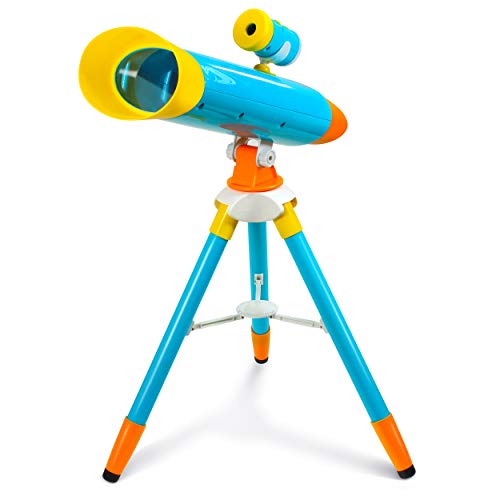 TOP CHOICEBest for younger kidsLittle Experimenter Projector Telescope, 24 Space ImagesView on Amazon
- 4
 Best for a complete starter setLUZSCO Telescope for Kids, 50mm 100x Christmas Gift Set with TripodView on Amazon
- 5
 Best budget pickTelescope for Kids with Compass and 3 Eyepieces, Space Toys for Boys & GirlsView on Amazon
- 6
 Best for ages 6–12 with tripodTelescope for Kids, 50mm 100x Beginner Telescope with TripodView on Amazon
Our Top Picks
Quick Comparison
| Product | Best for | Key feature |
|---|---|---|
| Gskyer 70mm Aperture 400mm AZ Mount Refracting Telescope | Overall family use and travel | 70mm aperture with carry bag and phone adapter |
| Little Experimenter Projector Telescope | Ages 3–12 and first look at space | Projects 24 space images |
| Telescope for Kids 50mm 100x Beginner Telescope | Ages 6–12 with tripod | Two eyepieces and finder scope |
| Telescope for Kids and Adults 70/500 Refractor | Travel and landscape viewing | Phone adapter and wireless remote |
| Telescope for Kids with Compass and 3 Eyepieces | Budget-minded gift buyers | Three eyepieces and built-in compass |
| LUZSCO 50mm 100x Christmas Gift Set | Complete starter kit | Carry bag, poster and STEM extras |
Gskyer Telescope 70mm Aperture 400mm AZ Mount Astronomical Refracting Telescope
Gskyer Telescope, 70mm Aperture 400mm AZ Mount Astronomical Refracting Telescope for Kids Beginners – Travel Telescope with Carry Bag, Phone Adapter and Wireless Remote.
Best for: Overall family use and travel
This refractor suits families who want one telescope that handles backyard Moon viewing and trips away from home. Its 70mm aperture gathers more light than the smaller 50mm models in this list, which helps with brighter targets.
Key specs:
- 70mm objective lens (aperture)
- 400mm focal length
- Altazimuth (AZ) mount
- Includes carry bag, phone adapter and wireless remote
Pros:
- Larger aperture than many starter refractors
- Carry bag makes it practical for travel
- Phone adapter supports simple photos of the Moon
Cons:
- Tripod may feel light in wind
- Higher magnifications will show softer images, as with any small refractor
Bottom line: A strong pick for families who want one scope that grows with the child and can go on trips.
View on AmazonLittle Experimenter Projector Telescope, 24 Space Images
Little Experimenter Projector Telescope, 24 Space Images, STEM Kids 3-12 | STEM Science Toy, Learning Gift for Boys & Girls Ages 3-12
Best for: Younger children and a first look at space
This projector-style toy is aimed at ages 3–12. Rather than a magnifying telescope, it projects space images, so it works well for children who are not yet ready to aim a real optical instrument at the sky.
Key specs:
- Projects 24 space images
- Designed for ages 3–12
- STEM learning toy
Pros:
- Simple to use with no focusing needed
- Good for indoor play on cold nights
- Introduces space topics gently
Cons:
- Does not show real stars or planets through the sky
- Older kids may outgrow it quickly
Bottom line: Best as a stocking-stuffer or companion gift for young children rather than a true observing telescope.
View on AmazonTelescope for Kids, 50mm 100x Beginner Telescope with Tripod
Telescope for Kids, 50mm 100x Beginner Telescope with Tripod | 2 Eyepieces, Finder Scope, Hands-On STEM Learning, Space Exploration Fun, Educational Toy Gift for Boys & Girls Ages 6-12
Best for: Ages 6–12 who want a tripod and two eyepieces
This 50mm refractor is built for hands-on learning. It includes two eyepieces and a finder scope, which makes locating targets easier for a beginner. You may also like Top 5 Glow in the Dark Planisphere Picks for Beginners.
Key specs:
- 50mm aperture
- Advertised up to 100x magnification
- Two eyepieces and finder scope
- Includes tripod
Pros:
- Finder scope helps kids find targets
- Two eyepieces allow simple magnification changes
- Complete package out of the box
Cons:
- Magnifications above about 50x rarely look sharp on small aperture scopes
- Tripod can wobble if extended fully
Bottom line: A good fit for school-age children who want a complete kit and clear, step-by-step setup.
View on AmazonTelescope for Kids and Adults 70/500 Astronomy Telescope for Beginners
Telescope for Kids and Adults, 70/500 Astronomy Telescope for Beginners | Kids' Christmas Gift, Refractor Telescope with Phone Adapter and Tripod, Outdoor Stargazing and Landscape Viewing
Best for: Travel and landscape viewing
Marketed for both kids and adults, this 70/500 refractor works for daytime landscape viewing as well as night-sky observing. Families who camp or visit the coast may find it useful.
Key specs:
- 70mm aperture
- 500mm focal length
- Phone adapter and tripod included
Pros:
- Works for daytime and nighttime viewing
- Phone adapter for quick photos
- Good light-gathering for its size
Cons:
- Small tripod may not suit windy conditions
- Needs patience to learn the focus and alignment
Bottom line: A practical choice for families who want a scope they can take outdoors in several settings.
View on AmazonTelescope for Kids with Compass and 3 Eyepieces, Space Toys for Boys & Girls
Telescope for Kids, Kids Telescope with Compass and 3 Eyepieces, Great Space Toys for Boys & Girls, STEM Educational Gifts for Astronomy Beginners to See Moon and Animals
Best for: Budget-minded gift buyers
This kit targets gift buyers who want several accessories without a large spend. The built-in compass is a useful teaching tool, since children can learn direction while locating the Moon or bright objects.
Key specs:
- Three eyepieces
- Built-in compass
- Designed for ages roughly 6 and up
Pros:
- Three eyepieces offer more magnification options
- Compass supports learning about direction
- Straightforward packaging for gifting
Cons:
- Small aperture limits faint objects
- Build quality varies across this product type
Bottom line: A sensible option for younger beginners when the budget is a priority and expectations stay realistic.
View on AmazonLUZSCO Telescope for Kids, 50mm 100x Christmas Gift Set with Tripod
LUZSCO Telescope for Kids, 50mm 100x Christmas Gift Set with Tripod | 2 Eyepieces, Finder Scope, Carrying Bag, Astronomy Poster, Luggage Tag, 8 Stickers, STEM Learning Gift
Best for: A complete starter set with extras
Designed explicitly as a Christmas gift, this set bundles the telescope with a carry bag, poster, stickers and a luggage tag. The extras turn the gift into an activity, which many families find helpful.
Key specs:
- 50mm aperture
- Two eyepieces and finder scope
- Tripod and carrying bag included
- Astronomy poster and stickers
Pros:
- Gift-ready packaging with many extras
- Carry bag keeps parts organized
- Includes learning materials
Cons:
- Magnification claims should be read with caution
- Extras can distract from actual observing
Bottom line: The best choice for a parent who wants everything in one box and a built-in learning theme.
View on AmazonBuying Guide
Aperture and Light-Gathering
Aperture, the diameter of the main lens or mirror, sets how much light the telescope collects. Small starter refractors around 50mm to 70mm show the Moon, Jupiter’s brightest moons and the Moon’s craters well. Larger apertures reveal fainter objects, but they also cost more and weigh more.
Good picks for this: Gskyer 70mm Aperture 400mm AZ Mount Refracting Telescope, Telescope for Kids 50mm 100x Beginner Telescope
Magnification and Realistic Expectations
Advertised magnification is often very high, but useful magnification on small scopes is usually lower. A common rule is to keep magnification at or below about 50 times the aperture in millimeters for a sharp image. Set expectations that the Moon and planets look small and soft, not like photographs.
Good picks for this: Telescope for Kids and Adults 70/500 Refractor, LUZSCO 50mm 100x Christmas Gift Set
Mount and Stability
An altazimuth mount moves up-down and left-right, which is easy for beginners. Tripods can be wobbly, so look for a sturdy base and avoid extending the legs more than needed. A stable mount matters more than high magnification for a child’s first view.
Good picks for this: Gskyer 70mm Aperture 400mm AZ Mount Refracting Telescope, Telescope for Kids and Adults 70/500 Refractor
Included Accessories
Finder scopes, extra eyepieces and phone adapters can make the first night much easier. A finder scope helps kids locate targets, and two or more eyepieces let them compare views without buying more gear.
Good picks for this: Telescope for Kids 50mm 100x Beginner Telescope, Telescope for Kids with Compass and 3 Eyepieces
Age and Ease of Setup
Younger children often do best with projector toys or very simple scopes. Children aged about 8 and up can usually handle focusing and basic alignment. Look for clear instructions and a design that a child can assemble with an adult nearby.
Good picks for this: Little Experimenter Projector Telescope, Telescope for Kids with Compass and 3 Eyepieces
Portability and Travel Use
If the telescope will travel to a campsite or a relative’s house, a carry bag and a compact tube are valuable. Check the overall length and weight before buying, since a long tube can be awkward for a small child to carry.
Good picks for this: Gskyer 70mm Aperture 400mm AZ Mount Refracting Telescope, LUZSCO 50mm 100x Christmas Gift Set
Build Quality and Care
Keep optics clean with a soft cloth and avoid touching lens surfaces. Store the telescope in its bag between uses, and keep eyepiece caps on. Owners often report that lightweight tripods loosen over time, so tightening the leg locks periodically helps.
Good picks for this: Telescope for Kids 50mm 100x Beginner Telescope, Gskyer 70mm Aperture 400mm AZ Mount Refracting Telescope
FAQ
What is the best Christmas telescope for kids step by step?
For most families, the Gskyer 70mm refractor offers the best mix of aperture, carry bag and phone adapter. For younger children, a projector toy or a simple 50mm kit with a finder scope is easier to manage.
What age is right for a kids telescope?
Ages 6 and up can usually handle a basic refractor with adult help. Children under 6 often enjoy projector telescopes more, since they require no focusing or alignment.
What can kids see through a beginner telescope?
Beginner scopes typically show the Moon’s craters and maria, Jupiter and its brightest moons, Saturn’s rings and some bright star clusters. Faint galaxies and nebulae are usually out of reach for small aperture scopes.
Do I need to assemble the telescope on Christmas Eve?
Most families find it helpful to assemble the telescope in daylight beforehand. A practice run lets the child learn the focus knob and mount without the pressure of a dark, cold night.
Is 100x magnification better than 50x?
Not necessarily. Higher magnification on a small aperture scope often looks dim and blurry. Lower magnifications with a steady mount usually give a more satisfying first view.
How do I find my first target?
Start with the Moon, which is bright and easy to locate. Use the finder scope to center it, then switch to the eyepiece. Once the Moon is in view, try a bright planet like Jupiter or Venus.
Conclusion
The Gskyer 70mm refractor suits families who want one scope that handles home and travel. The Little Experimenter projector works best for very young children, while the 50mm kits with finder scopes suit school-age beginners. The LUZSCO gift set and the budget-minded compass kit are good choices when packaging and extras matter. Match the telescope to the child’s age and patience, and plan a practice setup before the holiday.
Sources
- Current sky guides, Moon and planet viewing tips, and beginner observing resources (nasa.gov)
- Amateur astronomy education, observing guides and local club resources
- Toy safety standards and guidance for choosing age-appropriate gifts (cpsc.gov)
Before you buy: helpful guides
Related reading
- Top 5 Telescopes with 30x Magnification for Kids Worth Considering in 2026
- Top 5 DIY Telescope Kits for Kids Worth Considering in 2026
- Saxon Novo 607AZ Refractor Kids Telescope: Is It Right for Your Family?
About Caleb Morgan
Caleb Morgan is part of our editorial team and reviews and edits our astronomy for kids, teens & families guides, checking product details against manufacturer specifications and owner feedback.
About the author
Caleb Morgan writes reviews and buying guides for Youth in Astronomy.